

International concern is growing over the fate of Iranian Nobel Peace Prize laureate Narges Mohammadi, one of the country’s most prominent human rights activists, following her violent re-arrest by Iranian authorities during a memorial ceremony in the northeastern city of Mashhad.
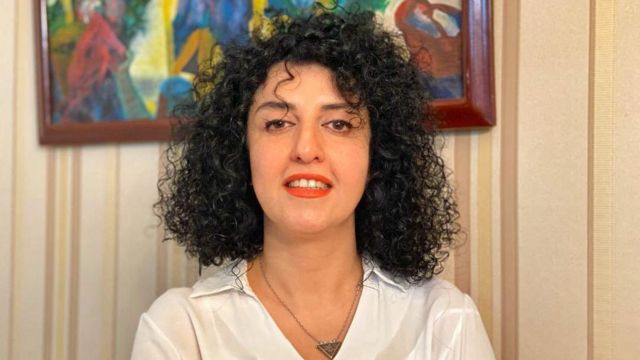
Prominent human rights activist and 2023 Nobel Peace Prize laureate Narges Mohammadi was detained last week after security forces raided a mosque where mourners had gathered to commemorate the death of Iranian human rights lawyer and activist Khosrow Ali Kordi. Witnesses reported that security forces used batons and tear gas to disperse the crowd, with Mohammadi allegedly beaten during the raid. She was reportedly hospitalised twice following the arrest, though her current whereabouts remain unknown.
In a statement, the Support Committee for Narges Mohammadi expressed deep concern over what it described as her violent arrest during the memorial ceremony. Khosrow Alikordi, in whose memory the event was held, was found dead in his office on 6 December 2025, shortly after his release from political detention in August, circumstances that have prompted renewed calls for an independent investigation.
Mohammadi’s husband, Taghi Rahmani, who lives in exile in Paris with their children, told The New York Times that the family has received no official information about her condition. “We are extremely worried,” he said.
The Norwegian Nobel Committee also condemned the arrest, calling on Iranian authorities to “immediately clarify Mohammadi’s whereabouts, ensure her safety and integrity, and release her unconditionally.”
A decade in Prison
Mohammadi, 52, has spent more than a decade of her life in prison for her activism, most recently after her 2021 arrest on charges including “spreading propaganda against the state” and threatening Iran’s national security. Her work has focused on human rights, women’s rights, and opposition to the death penalty. She was temporarily furloughed from Tehran’s notorious Evin Prison in December 2023 after suffering multiple heart attacks while incarcerated.
Despite her imprisonment, Mohammadi was awarded the Nobel Peace Prize in 2023 for her decades-long struggle against oppression in Iran, particularly her advocacy for women and political prisoners. At the time, she remained behind bars, and her twin children, Ali and Kiana Rahmani, accepted the prize on her behalf at the ceremony in Oslo, reading a speech she had smuggled out of prison.
In the speech, Mohammadi described Iran’s ruling system as suffering from a crisis of legitimacy and warned that growing public resistance could catalyse political transformation.
One of Iran’s most courageous activists
In recent weeks, Mohammadi has again drawn attention inside and outside Iran. A video showing her standing atop a car without the mandatory hijab, chanting slogans in support of the “Woman, Life, Freedom” movement, circulated widely on social media. Earlier this month, she also published an opinion piece in Time magazine titled “Iran Is Still at War With Its People.”
Speaking on Democracy Now!, Iranian American author and essayist Shahrzad Mojab described Mohammadi as “one of Iran’s most courageous and consistent human rights activists,” noting that she continued to organise and inspire activism even from inside prison during the nationwide protests that followed the death of Mahsa Amini in 2022.
Mojab emphasised that the circumstances of Mohammadi’s latest arrest were particularly alarming, citing eyewitness accounts of severe violence during the memorial in Mashhad, a major religious city. “This arrest appears calculated,” she said, adding that authorities view Mohammadi’s moral authority as a direct threat to the Islamic Republic.
The memorial itself had already drawn scrutiny due to the suspicious death of Khosrow Ali Kordi earlier this month. Iranian authorities claimed he died of natural causes, but activists have called for an independent investigation, citing reports of visible injuries.
Human rights organisations warn that Mohammadi’s re-arrest, especially during a period of medical leave, underscores the Iranian government’s continued repression of dissent, even against internationally recognised figures. As global pressure grows, activists fear that without sustained attention, Mohammadi’s safety remains at serious risk.