

More than a decade after the Gezi Park protests shook Erdoğan’s rule, the jailing of Istanbul Mayor Ekrem İmamoğlu has reignited mass mobilisation across Turkey. As streets once again fill with protesters, the crackdown reveals how far authoritarian consolidation has advanced and how much is now at stake for Turkey’s democratic future.
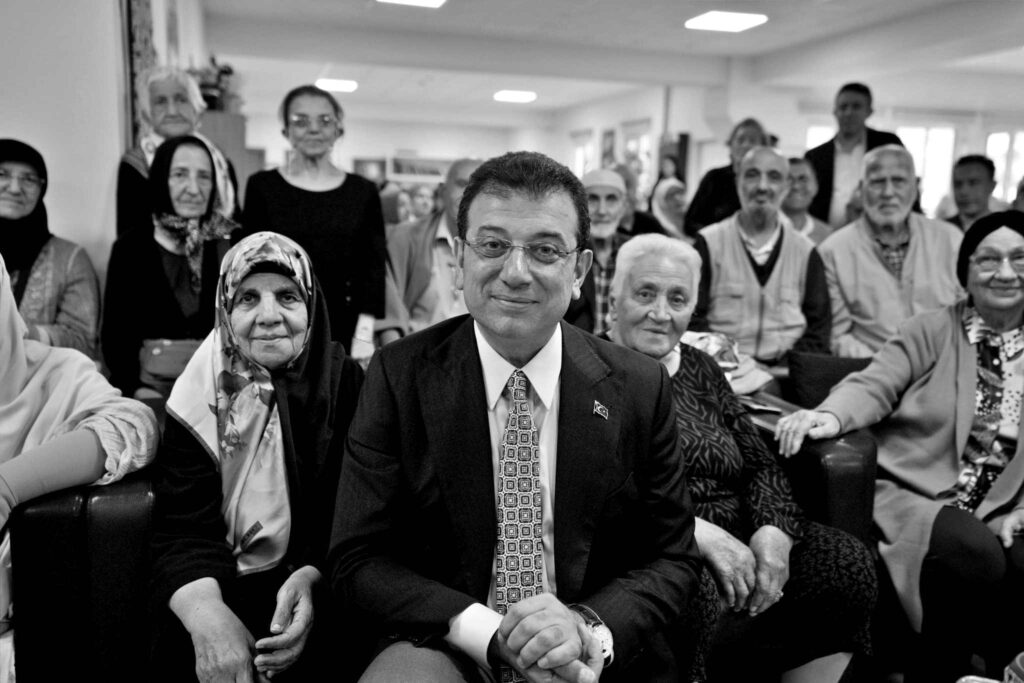
Turkey is once again living through one of its most contentious political moments. The arrest and jailing of Istanbul Mayor Ekrem İmamoğlu, one of the country’s most popular opposition figures and a leading contender for the presidency, has triggered mass protests, deepened political polarisation, and raised renewed concerns about democratic backsliding under President Recep Tayyip Erdoğan.
İmamoğlu has long occupied a distinctive place in Turkey’s opposition landscape. In a political system structured by sharp ideological, cultural, and partisan divides, he has cultivated a political style defined by inclusion and optimism rather than confrontation. His appeal lies not only in his electoral success but in his ability to speak across constituencies that are usually kept apart by Turkey’s polarised political order. This has made him one of the country’s most recognisable and credible opposition figures and, increasingly, a direct challenge to the ruling establishment.
That challenge was brought into sharp focus in mid-March. On March 19, just days before the opposition Republican People’s Party (CHP) was due to hold its presidential primary, Istanbul University annulled İmamoğlu’s university degree. Because a university degree is a legal requirement for presidential candidates in Turkey, the decision effectively disqualified him from the race. The following morning, he was arrested on charges of corruption and alleged links to terrorism.
The sequence of events immediately raised questions about political timing and intent. İmamoğlu was the sole candidate in the CHP primary and was widely expected to receive the party’s official nomination for the 2028 presidential election. On the same day as the primary, a court placed him in pre-trial detention and removed him from office as mayor of Istanbul. For many observers, the combination of administrative, judicial, and security measures amounted to a coordinated effort to neutralise the opposition’s most viable candidate well in advance of an electoral contest.
The arrest was followed by an extensive crackdown. More than 100 additional arrest warrants were issued, key roads in Istanbul were blocked, and a nationwide four-day ban on protests was imposed. Access to major social media platforms was restricted, further limiting the circulation of information and constraining political mobilisation. These measures were clearly designed to contain unrest, yet they produced the opposite effect.
Turkey soon witnessed its largest street demonstrations in over a decade. Protesters repeatedly invoked the legacy of the 2013 Gezi Park protests, the last mass uprising to seriously challenge Erdoğan’s dominance. This time, the protests were led in large part by a generation that has grown up entirely under AKP rule. Since coming to power, Erdoğan’s government has steadily centralised authority, weakened judicial independence, and narrowed the space for independent journalism. For many younger demonstrators, İmamoğlu’s arrest crystallised long-standing frustrations about political exclusion, economic precarity, and the erosion of democratic norms.
The movement also quickly extended beyond Turkey’s borders. Members of the Turkish diaspora organised solidarity demonstrations across Europe and elsewhere, giving the crisis an international dimension and increasing external scrutiny. İmamoğlu described his arrest as a blow to the will of the nation and pledged to continue his political struggle. CHP chair Özgür Özel characterised the move as a coup, arguing that judicial instruments were being used to restructure political competition rather than adjudicate legal wrongdoing.
Repression did not end with the protests. Since March 19, more than 1,000 people, including journalists, have reportedly been detained. Yet demonstrations across the country have remained largely peaceful, despite bans and police pressure. International reactions have been cautious but critical. German officials described the arrest as unacceptable and expressed serious concern about developments in Turkey. At the same time, Ankara’s strategic importance is likely to limit the depth of sustained international condemnation. Erdoğan has dismissed the protests, warning the CHP that the era of shaping politics through the streets is over.
The political significance of İmamoğlu’s arrest cannot be understood without recalling his earlier electoral victories. His win in the 2019 Istanbul mayoral election marked a turning point. Istanbul had been governed by Erdoğan’s political movement for 25 years, and losing the city represented both a symbolic and material blow to the AKP. When authorities annulled the initial vote, which İmamoğlu had narrowly won, the expectation was that the opposition would be weakened. Instead, he won the rerun by a substantially larger margin.
That episode became a powerful symbol of democratic resilience. It suggested that even in a political system increasingly tilted in favour of the ruling party, electoral competition still mattered and opposition victories were possible. It also demonstrated the limits of repression, showing that attempts to reverse electoral outcomes could backfire and strengthen opposition legitimacy.
Today, the stakes are higher. The jailing of İmamoğlu is no longer simply about one politician or one mayoral office. It reflects a broader pattern in which legal and institutional mechanisms are deployed to narrow the space of electoral competition and manage political uncertainty. Whether the current wave of mobilisation can alter this trajectory remains unclear. What is clear is that Turkey has entered another critical juncture, one in which the legacy of Gezi, the fate of opposition politics, and the future of democratic contestation are once again deeply intertwined.