

Saeid Golkar and Jason M. Brodsky examine how Iran’s latest wave of protests, driven by economic collapse, both differs from and mirrors the 2022 Woman, Life, Freedom movement, highlighting shared patterns of repression and mobilisation while explaining why the current unrest may pose a deeper challenge to the regime.
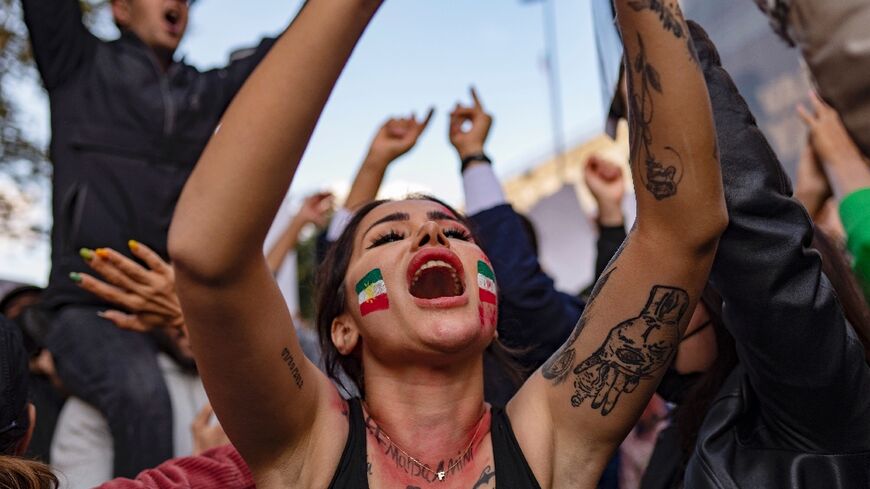
Iran is once again gripped by nationwide protests, with demonstrations erupting across major cities. What began as economically driven protests has evolved into broader expressions of defiance, met by a heavy security crackdown, mass arrests, and reports of lethal force.
In a recent analysis, Saeid Golkar and Jason M. Brodsky examine Iran’s latest wave of protests, arguing that while the 2022 uprising was rooted in a moral revolt against repression, the current unrest is driven by acute economic collapse. They show how currency freefall, inflation, and declining living standards have mobilised broader social groups, from bazaar merchants to students, and warn that the convergence of economic desperation with unresolved political grievances signals a deepening rupture between the Iranian state and society that could pose a more sustained challenge to the Islamic Republic.
Golkar and Brodsky situate the late-2025 protests as the most serious challenge to the Islamic Republic since the 2022 Woman, Life, Freedom uprising that followed the death of Mahsa Amini. They stress that while the triggers differ, the underlying condition is the same: a profound and unresolved rupture between state and society.
The 2022 protests were driven by moral outrage over repression, gender control, and personal freedom, with women and youth at the forefront. The current protests, by contrast, are rooted in economic collapse, with soaring inflation, currency devaluation, and unemployment mobilising bazaar merchants, students, and the urban middle class. Yet both movements spread rapidly via social media, quickly transcended their initial sites, and were met with violent repression.
The authors emphasise several features that make the current protest wave distinct. First, it has been geographically broader at an earlier stage, extending beyond major urban centres into smaller and more economically marginalised areas. Second, it is unfolding in a far harsher international and regional environment for Tehran. Renewed US pressure under Donald Trump, combined with explicit threats of military force and Iran’s weakened regional position, has intensified elite anxiety and deepened the economic crisis. Golkar and Brodsky argue that this context both sharpens popular grievances and reinforces the regime’s tendency to frame protests as foreign-engineered “soft war,” rather than as the product of domestic failure.
They also note an important ideological shift within the protests themselves. While Woman, Life, Freedom remains a powerful symbolic reference, new slogans increasingly point toward explicit regime change, including monarchist calls associated with Reza Pahlavi. This reflects growing political exhaustion and a search for alternatives amid prolonged crisis. At the same time, the regime’s response remains familiar. Ali Khamenei has acknowledged economic grievances while deflecting blame onto external enemies, pairing rhetorical concessions with repression. Golkar and Brodsky conclude that whether this protest cycle endures will depend on cross-class unity, the translation of economic anger into coherent political demands, and the emergence of fractures within the elite and security forces. What is unmistakable, they argue, is that the drivers of dissent have not faded since 2022 but have intensified.
This article has been published in Foreign Policy. To access the full version, click here.
Saeid Golkar serves as a senior advisor to United Against Nuclear Iran and is an associate professor of political science at the University of Tennessee at Chattanooga, where he holds a UC Foundation appointment.
Jason M. Brodsky is the policy director at United Against Nuclear Iran and a nonresident scholar at the Middle East Institute. He