

New research suggests that attitudes toward gender equality among younger generations, particularly young men, may be shifting in unexpected and troubling ways. Far from continuing a steady march toward progress, new data indicate a generational divide that is challenging long-held assumptions about social change.
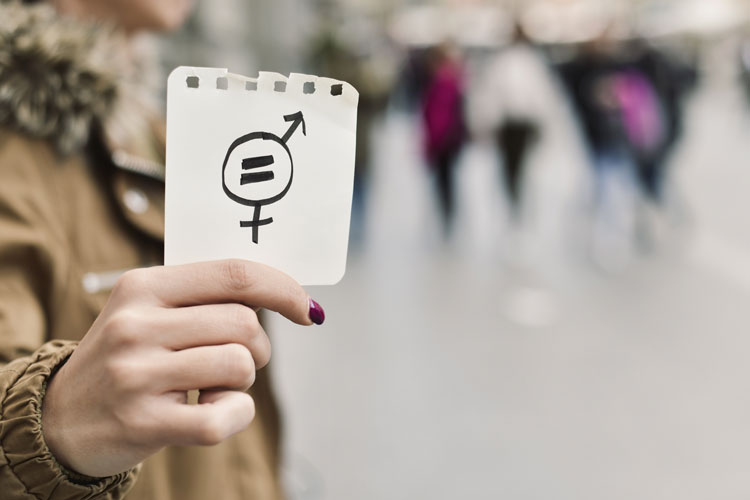
New research from the Global Institute for Women’s Leadership, conducted in partnership with Ipsos, draws on large-scale surveys across dozens of countries and thousands of respondents to track changing attitudes toward gender equality.
The findings point to a clear generational divide: young men are significantly more likely than both young women and older cohorts to express scepticism about gender equality and to endorse more traditional gender roles. At the same time, a notable share of respondents believe equality efforts have already gone far enough or even too far, revealing a sharp disconnect between perceptions of progress and the persistence of structural inequalities.
Speaking to the BBC World Service, Julia Gillard, former Australian PM now chair of the Global Institute for Women’s Leadership at King’s College London, described the findings of a new study “confronting” and “deeply troubling.”
A generational reversal
For decades, many policymakers and activists assumed that each generation would become more progressive than the last. But recent research suggests otherwise.
One headline finding shows that around one-third of young men believe a wife should always obey her husband, with a similar proportion saying men should have the final say in important decisions. These views mark a significant departure from older generations.
Gillard admitted the results challenged her own expectations. “I’ve always lived with the sense that every generation is a bit more progressive than the one before,” she said. “To see younger generations more conservative on these questions is deeply troubling.”
The rise of the manosphere
Experts point to the growing influence of online subcultures often referred to as the “manosphere,” where masculinity is increasingly framed in terms of strength, dominance, and, in some cases, hostility toward women.
Gillard argues that misogyny itself is not new, but the digital environment has transformed how it is expressed. “There are now plenty of ways of letting your inner misogynist out without paying any price,” she said.
Unlike previous generations, today’s young men are also exposed earlier to online content, including highly sexualised and often violent material, which may shape attitudes toward relationships and gender roles.
A sense of being “left behind”
Another explanation lies in how young men interpret social change. Many have grown up during a period of targeted initiatives aimed at empowering women and girls, particularly in education and leadership.
While these programmes were designed to address inequality, some young men perceive them as exclusionary.
“They may look at that and think, ‘Why are they getting all of this and we’re missing out?’” Gillard said. This perception can foster a belief that gender equality is a zero-sum game, where gains for women come at the expense of men.
Yet research consistently shows the opposite. “When we rise, we rise together,” Gillard emphasised, arguing that a more equal world benefits men as well as women.
Contradictions in Gen Z attitudes
The data also reveals striking contradictions.
Young men are more likely than older generations to say that successful women are attractive. At the same time, many still express support for traditional gender roles at home.
This creates what Gillard describes as a “duality” that does not easily add up. “They want someone forging ahead at work but apparently submissive at home,” she said. “These women don’t exist.”
The influence of online culture
Social media and algorithm-driven platforms are widely seen as amplifying these trends.
Mainstream culture continues to promote narrow ideals of masculinity centred on power and physical strength, while online spaces reinforce and radicalise these messages. Influencers associated with the manosphere often blend self-improvement advice with more extreme views about gender.
The result, Gillard suggests, is a feedback loop in which young men are exposed to increasingly rigid and sometimes misogynistic ideas about what it means to be male.
The “tradwife” paradox
At the same time, some young women are engaging with so-called “tradwife” content, which promotes a return to traditional domestic roles.
However, research suggests this is more fantasy than reality. Many young women consuming such content are not seeking to adopt those lifestyles, but rather reacting to the pressures of balancing work and family life.
“It’s a fantasy about escaping the difficulties of modern life,” Gillard explained.
Global variations and real-world consequences
The trends are not uniform across countries, but some regions highlight the potential long-term implications.
In South Korea, for example, there is a sharp divide between young men and women on gender issues. This has translated into real-world outcomes, including declining marriage rates and one of the lowest birth rates ever recorded outside wartime or famine.
“These things are not just academic,” Gillard noted. “They affect behaviour in the real world.”
Politics, backlash, and the “woke” debate
The findings also intersect with broader political debates. Gender equality has increasingly been drawn into wider cultural conflicts, particularly around “woke” politics.
Gillard argues that some diversity and inclusion initiatives have been ineffective or poorly implemented, making them easy targets for criticism. Political figures, including Donald Trump, have capitalised on this backlash, framing gender equality as part of a broader ideological divide.
At the same time, Gillard acknowledges that advocates may need to rethink how they communicate the benefits of equality. “We have allowed an impression to settle that more for women means less for men,” she said.
The role of AI and future risks
Looking ahead, emerging technologies could further complicate the picture.
AI systems trained on existing data risk reproducing and amplifying gender biases. Some studies have already shown AI tools advising women to ask for lower salaries than men with identical qualifications.
“If we don’t regulate AI, it will simply reproduce the biases already in the system,” Gillard warned.
A difficult but hopeful outlook
Despite the concerning trends, Gillard remains cautiously optimistic.
“I think we’ve got a few troubled years ahead,” she said. “But I do think we will emerge from them with people saying we don’t want to do that again.”
Her conclusion returns to a central theme: gender equality is not a zero-sum game. A less equal world, she argues, would not only disadvantage women but ultimately make life harder for men as well.