

In an impassioned address to the UN Security Council, Slovenian President Nataša Pirc Musar warned that artificial intelligence is fast becoming a destabilising force in global security, urging world powers to treat the technology as both an existential threat and a strategic opportunity requiring urgent oversight.
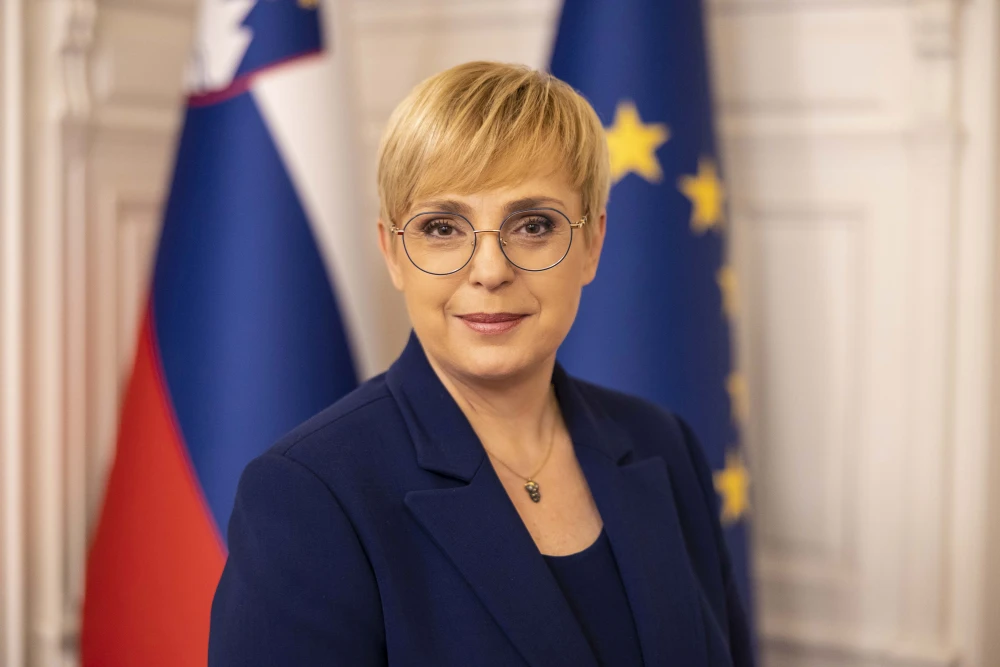
Slovenian President Nataša Pirc Musar delivered a striking warning to the UN Security Council, arguing that artificial intelligence is rapidly emerging as a threat to global peace and demanding stronger international oversight to prevent catastrophic misuse. Speaking at an open debate convened by the Republic of Korea, she urged world leaders to confront the dangers of autonomous weapons and the accelerating digitalisation of warfare before it is too late.
Pirc Musar, who previously worked as a lawyer specialising in human rights and data protection, opened her remarks by challenging common assumptions about AI. Artificial intelligence, she said, “is neither artificial nor intelligent,” because it merely absorbs the knowledge humans have accumulated while also being prone to hallucinations. If such hallucinations occur within autonomous weapons systems, she warned, “nothing good will happen.”
She described a dramatic shift in global warfare since her last appearance before the Council two years ago. Conflicts in Gaza, Sudan and Ukraine, she argued, have become testing grounds for advanced technologies that remove human judgment from combat scenarios. While human soldiers may later feel remorse or accountability, machines have no conscience. “We cannot appeal to the mercy of algorithms, drones or robots,” she said, adding that technology is increasingly determining the fate of humanity without corresponding mechanisms for ethical restraint.
Despite these dangers, Pirc Musar acknowledged that AI can also bring significant benefits. She highlighted its potential to assist UN peace operations through improved translation, quicker analysis of field reports and more efficient logistical planning. AI-driven modelling could also help predict displacement and food insecurity linked to conflict and climate-related disasters. However, she warned that excessive dependence on AI could weaken human judgment, comparing it to muscles that atrophy without use.
The Slovenian president also focused on the growing international debate around lethal autonomous weapons systems. She welcomed the UN’s ongoing discussions but stressed that the world is still moving too slowly. She cited expert concerns that autonomous weapons could lower the threshold for countries to enter conflicts, allow civilian research to be redirected toward military purposes and enable militaries to obscure human responsibility in life-and-death decisions. Beyond the battlefield, she noted that AI is already being misused in cyberattacks, terrorism, organised crime and environmentally harmful activities, all of which compound threats to international peace and security.
Given the scale of these risks, Pirc Musar insisted that the Security Council cannot remain on the sidelines. She called for regular briefings from the UN Secretary General on developments in AI that affect global stability and urged the Council to integrate AI-related risks into its agenda, particularly in relation to protecting civilians and supporting peace operations. She also emphasised that any decision-making involving AI must remain rooted in international law, including humanitarian and human rights norms, and must adhere to clear ethical principles.
Pirc Musar closed her remarks with a reminder that human beings remain responsible for every algorithm ever written. “Responsibility and accountability must never be outsourced,” she said. She also warned of a deepening global crisis of trust, which she described as a major obstacle to effective governance in the digital age. Without renewed trust among states, she argued, even the most sophisticated regulation will falter. “If the lack of trust becomes too great, we all lose.”
Her message resonated across the chamber: the world stands at a crossroads, and the decisions taken now will shape the consequences of artificial intelligence for generations.