

8 March 2026 entered history not merely as a day of commemoration, but as a symbol of a powerful global objection to patriarchy. Across different parts of the world, millions of women took to the streets simultaneously to declare that they are no longer only demanding equality; they want to transform the system itself.
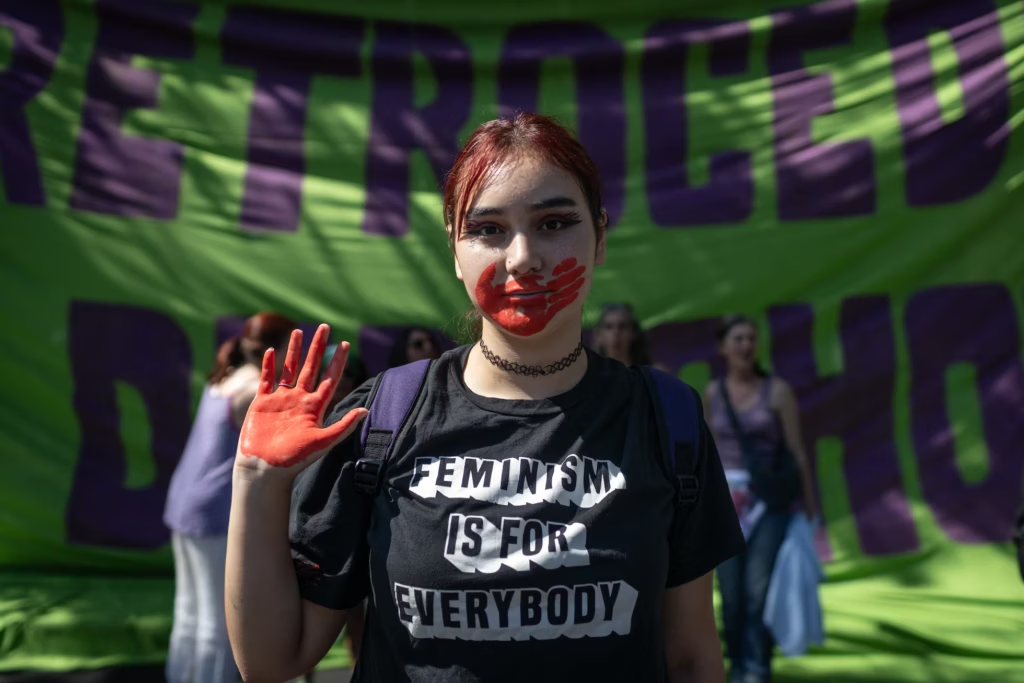
From the dusty streets of Mexico to the technology hubs of Seoul, from Madrid’s plazas to Berlin’s avenues, from the crowded streets of Istanbul to the broad boulevards of Argentina, a purple wave swept across continents, signalling a new phase in the global women’s movement.
This year’s demonstrations saw one of the highest participation levels of the past decade. Spain in particular stood out as one of the strongest centers of the women’s movement. In Madrid and Barcelona, nearly half a million women filled the streets. In squares covered with purple banners and smoke, women demanded not only an end to physical violence but also the recognition of “institutional and economic violence.”
The Spanish women’s movement strongly brought forward the demand that care work be recognized as a public responsibility and that it receive a dedicated share of the state budget.
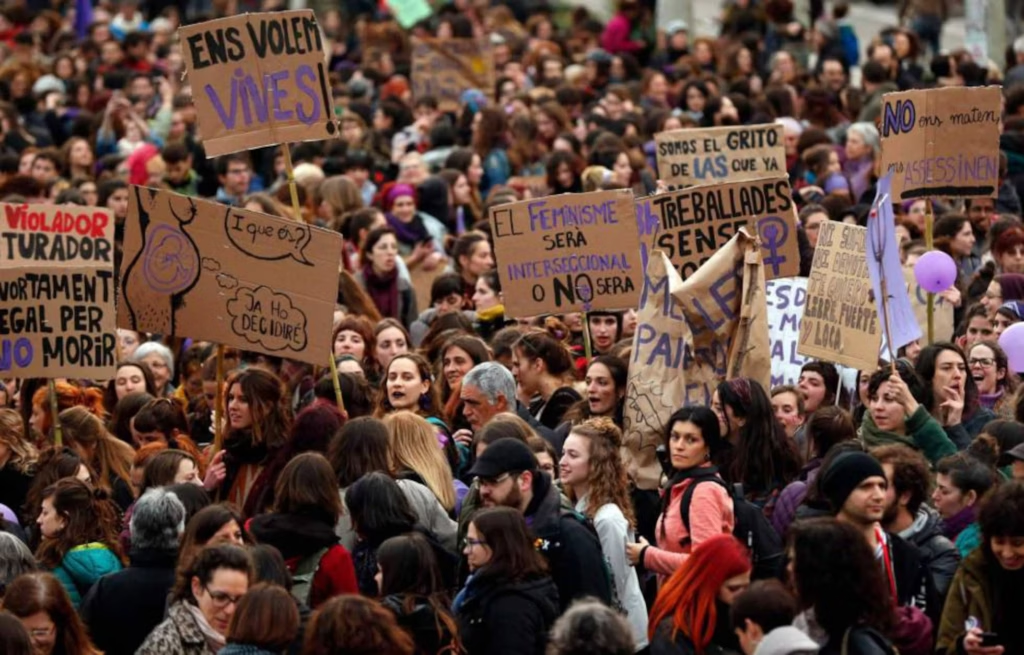
In Mexico, hundreds of thousands of women gathered in Zócalo Square to protest the epidemic of femicide. Against a culture of impunity that has persisted for years, the clearest message was this: femicides must now be treated as a security issue, and the judicial system must be restructured accordingly.
In Berlin, tens of thousands of women marched against the rising cost of living. The slogan “Let poverty not become feminized” once again highlighted how economic crises disproportionately affect women.
In Seoul, young women called on technology companies and the government to take responsibility for digital violence and AI-based harassment. The women’s movement is now confronting the new faces of patriarchy not only in the streets but also in the digital world.
During demonstrations in Turkey, women declared that their only answer to male violence, militarism, and war is feminism.
A Year of Rights, Justice, and Action
The United Nations designated this year’s International Women’s Day theme as “Rights, Justice, Action.” UN Women reminded governments that, at the current rate of progress, achieving full legal equality could take 286 years, calling for concrete policies and budget commitments rather than symbolic rhetoric. The message from women in the streets was the same: there is no time to wait.
Another aspect that made 8 March 2026 distinctive was that women defined patriarchy not simply as male dominance but as a system intertwined with capitalism, authoritarianism, and inequality. As a result, the struggle has taken on a multi-layered form.
In many countries, women organized economic strikes. The slogan “If we stop, the world stops” once again reminded society that invisible care work is one of the fundamental pillars of the economy.
In other contexts, women’s solidarity networks strengthened social cooperation by creating alternative support and justice mechanisms when legal systems proved inadequate. In the digital sphere, women programmers and activists built safer online spaces to resist the transformation of technology into a tool of oppression against women.
Redefining the Dicussion
8 March 2026 showed once again that the women’s movement is no longer on the defensive. Women are not simply demanding a seat at the table; they want to redefine how the table itself is set.
The purple wave rising across the world today demonstrates that women’s demands for equality, justice, and freedom know no borders. Women are no longer asking merely for recognition of their rights; they are calling for the construction of an equal and free future in all areas of life.
And it increasingly appears that women’s struggle for equality and their demand for freedom are becoming a global way of life.
We hope that this purple wave will bring peace to our world.