

Bilgi University was never simply an educational institution that handed out diplomas. It had an academic orientation that reached out to the most vulnerable parts of society and remained attentive to global crises and human rights concerns, says Ayse Yorgancioglu, Board Member of SES Equality and Solidarity Association.
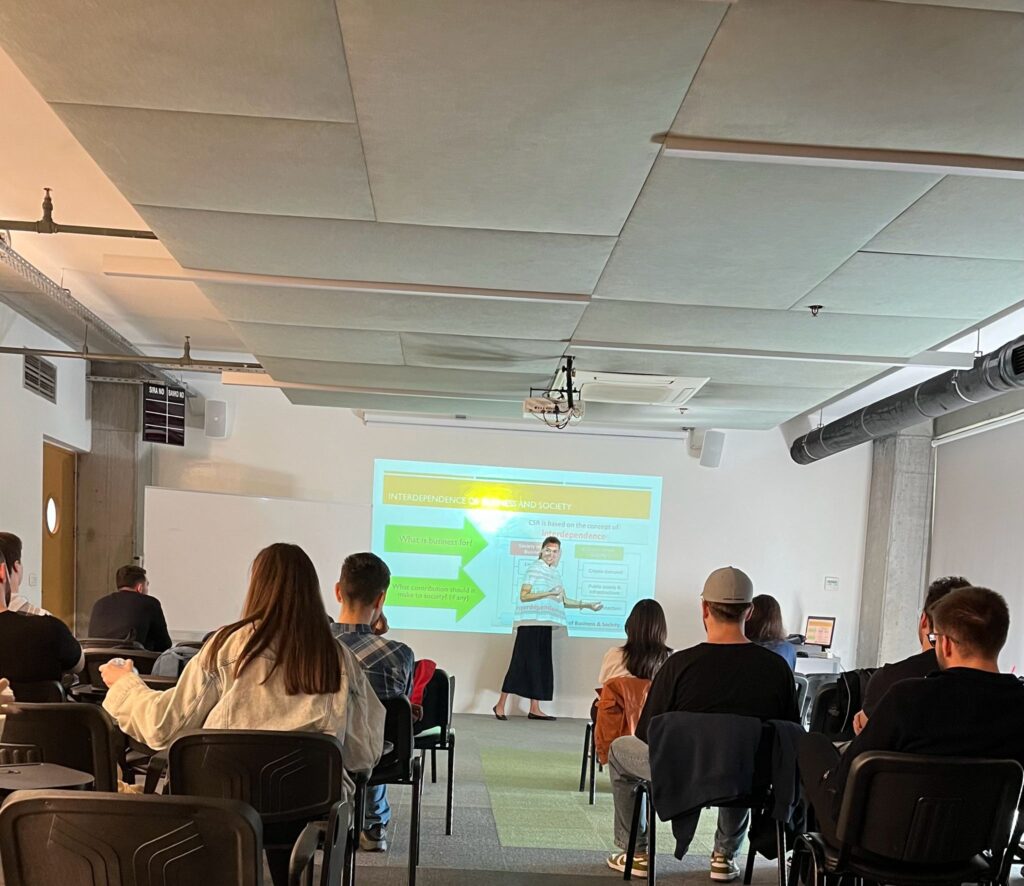
On Thursday, President Recep Tayyip Erdoğan signed a decree shutting down Istanbul Bilgi University, one of Turkey’s oldest private universities, eight months after the state seized its parent foundation amid a criminal investigation. The decree, published in the Official Gazette, cited a law permitting the closure of private institutions where “the expected level of education and training … is insufficient,” and noted that the university’s licence had been revoked on the grounds that “the founding foundation has been placed under trusteeship.”
The decision has sent shockwaves through the institution, provoking outrage and protests among students and staff who received no warning and, in many cases, had not yet sat their final examinations. Our board member Dr Ayşe Yorgancıoğlu, an Adjunct Lecturer at the university, wrote the following reflection on what this loss means, not only for those directly affected, but for Turkish academic life and democracy more broadly.
Since her words, following protests and public backlash that lasted three days, the government reversed its decision to shut down Bilgi University, which had been arbitrarily ordered on the night of 21 May. The decision to close the university, issued by presidential decree on 24 May, was later annulled through another presidential decree. While these events laid bare the extent of arbitrariness in Turkey’s system of governance, they also reminded us of the importance and power of collective social struggle.
Losing a University
My beloved country, which has been forced to endure cuts to one vital part of itself after another, lost yet another of its most treasured institutions this week.
Bilgi University is a highly respected institution both at home and abroad, one of Turkey’s most distinguished private universities, having produced thousands of graduates across fields ranging from Law to Psychology, International Relations to Media, Gastronomy to Mechatronics. But what made Bilgi a “good university” was never simply its academic rankings or the achievements of its alumni. Bilgi became a place marked into people’s memories for its commitment to academic freedom, its work in the field of human rights, its ties to civil society, its gender studies programmes, and the space it opened up for student initiatives. For many years, it embodied a campus culture that was pluralist, open to debate, and hospitable to a plurality of voices.
Building a Space for Thought
The University’s Human Rights Law Research Center had for years been carrying out work in areas such as freedom of expression, academic freedoms, women’s rights, refugee rights, and artistic freedom. Its Child Studies Unit conducted significant research and advocacy over many years in areas including children’s rights, child poverty, educational inequality, and child labour. Similarly, the Centre for Migration Research became one of Turkey’s pioneering academic centres on issues of asylum, migration policy, and social integration. The Rainbow LGBT Club, founded in 2007 by Bilgi students, was, according to multiple sources, the first LGBT student society to operate officially within a university affiliated with the Council of Higher Education (YÖK). This was never merely a matter of a student club. It was a profoundly symbolic step in making different identities visible in Turkey, allowing people to feel safe and enabling them to exist in public life.
Bilgi University, in other words, was never simply an educational institution that handed out diplomas. It had an academic orientation that reached out to the most vulnerable parts of society and remained attentive to global crises and human rights concerns. In doing so, it was a public space that gave people room to think, to debate, to dissent, to coexist, and to live freely alongside those who were different from themselves.
The Institutions of Freedom
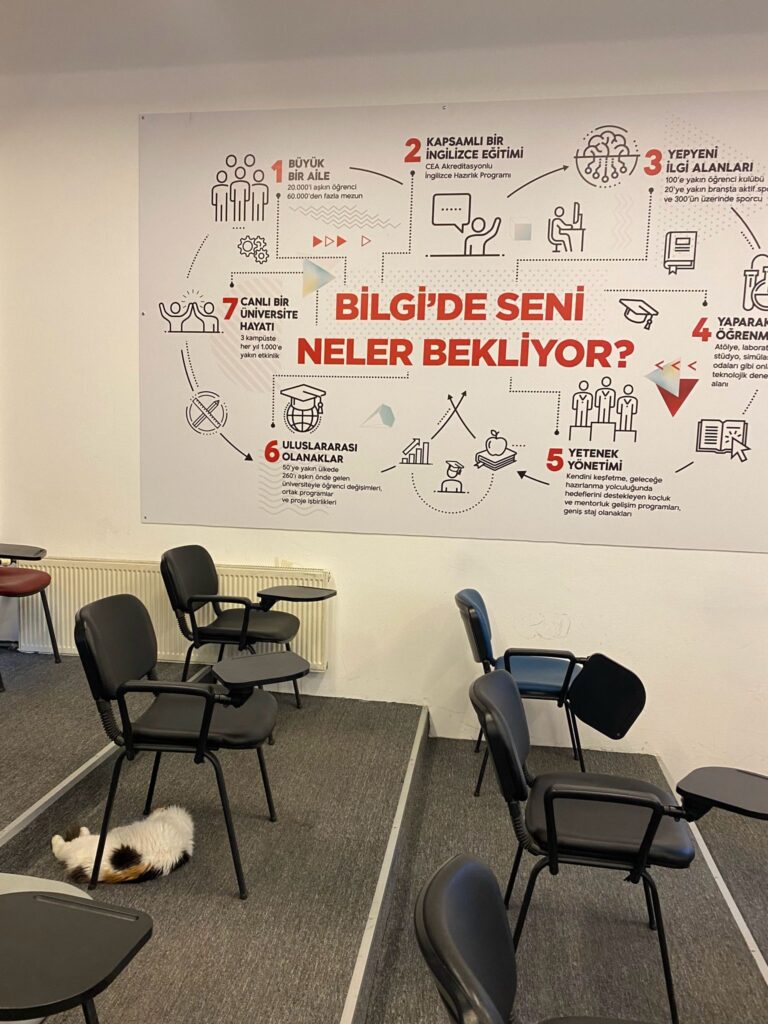
Photo: Ayse Yorgancioglu
Genuine knowledge production requires academic freedom. And academic freedom requires autonomy. When we look at well-established universities abroad, we find that many were founded two or three hundred years ago. These institutions have endured independently of passing governments, short-term political calculations, and arbitrary interference. This is precisely what makes universities strong: their ability to remain beyond the reach of day-to-day political bargaining and short-sighted interests.
Institutions of this kind are not built in a day. They are constructed through the labour of thousands of people, through a shared intellectual accumulation formed over years, and through a public culture. That is why the destruction of a university is not simply a matter of putting a lock on its door. Universities are not companies. They are not pieces of land. They are certainly not anyone’s private property. Universities are social memories, woven together stitch by stitch. They are the spaces of thought that stand as guarantors of our future. They are a country’s capacity to produce culture. They are among the last public spaces where young people can breathe.
The Silent Collapse of Democracy
What is lost here today is not merely an institution. Those left without a place to belong are not simply tens of thousands of students and academics. What has in fact been gutted is our shared collective memory. Our capacity to produce culture. Our space for critical thought. Our freedom of education. Ultimately, democracies are sustained not by elections alone, but by institutions capable of living independently of political power. These include universities, an independent judiciary, a free press, and civil society. That is precisely why one of the most effective ways to bring democracies down is to weaken these institutions and, in time, to eliminate them entirely.
A footnote to my students: This week’s class has been cancelled. In fact, all of our classes have. And you hadn’t even had the chance to sit your final exams. Please don’t forget the values we taught you, all right? This country is going to need your memory more than anything else…