

Writing in Newsweek, Özel argues that mounting pressure on opposition politicians and institutions has pushed Turkey’s democracy to a critical juncture, with consequences extending beyond the country’s borders.
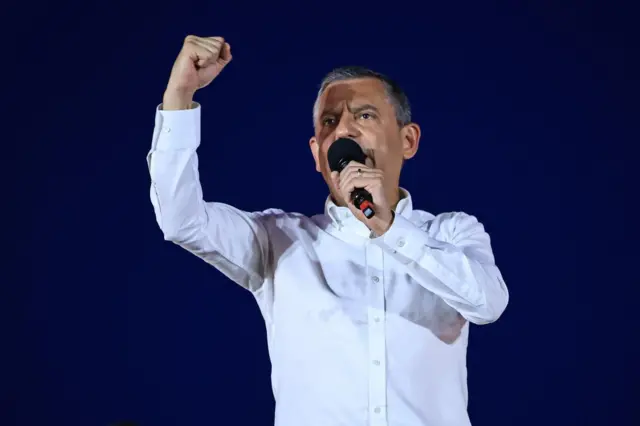
In an article for Newsweek, CHP leader Özgür Özel has warned that the erosion of democratic institutions under President Recep Tayyip Erdoğan has become more than a domestic political issue. He has argued that Turkey’s democratic backsliding now poses wider challenges for regional stability and international security.
According to Özel, the Turkish government has intensified pressure on the opposition following the Republican People’s Party’s (CHP) strong performance in the 2024 local elections. He highlights how the incumbent has facilitated the arrest of Istanbul Mayor Ekrem İmamoğlu, widely regarded as Erdoğan’s most prominent political challenger, as well as the detention of numerous opposition mayors and municipal officials, to pursue the crackdown.
Özel also criticises recent judicial decisions affecting the Republican People’s Party (CHP), arguing that the courts have become increasingly involved in the party’s internal affairs. He points in particular to legal proceedings challenging the legitimacy of the CHP congress that elected its current leadership, which has paced the way for judicial intervention in the party’s leadership structure. According to Özel, such measures, alongside the prosecution of opposition politicians, are intended to weaken the opposition and limit democratic competition.
Central to Özel’s argument is the idea that democracy provides peaceful mechanisms through which governments can be challenged and replaced. He warns that if these channels are removed, public frustration may deepen, creating a crisis of legitimacy and increasing the risk of political instability.
The opposition leader further argues that Turkey’s strategic position makes democratic decline particularly significant. As a key NATO member, a major regional military power, and an important actor in migration, energy, and Black Sea security, instability in Turkey could have consequences extending beyond its borders.
Özel suggests that governments facing declining domestic legitimacy may increasingly rely on nationalist rhetoric or external confrontations to bolster support. For this reason, he maintains that democratic governance and regional stability are closely connected.
Despite his criticism of the current political trajectory, Özel emphasises that he sees Turkey’s future within a democratic and European framework. He argues that stronger democratic institutions are essential if Turkey is to remain a reliable partner for Europe and play a constructive role in the region.
See the full article here.