

Colombia has elected Abelardo de la Espriella, a far-right lawyer with no political experience, in the closest race in its modern history. At stake: a fragile 2016 peace, the independence of democratic institutions, and whether a president who has threatened to jail his critics will deepen the country’s democratic backsliding.
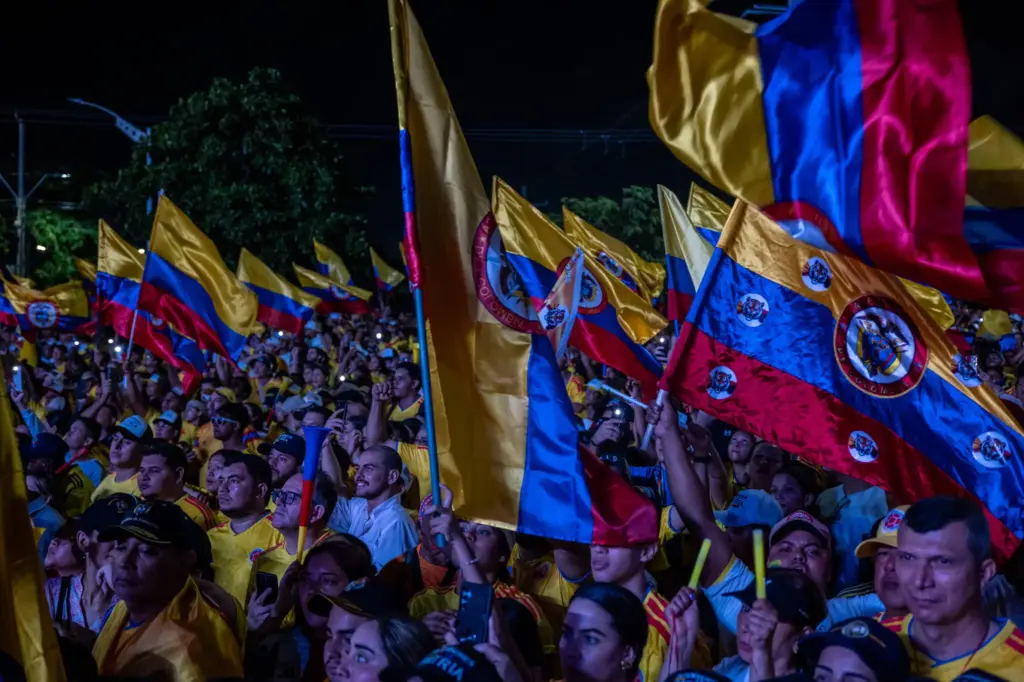
Colombia has elected the far-right lawyer Abelardo de la Espriella as president, after a knife-edge runoff that handed him just under 50% of the vote against the leftist senator Iván Cepeda. The margin was around 250,000 votes, and both the outgoing president, Gustavo Petro, and Cepeda have refused to accept the preliminary count, with Cepeda’s team vowing to challenge results from tens of thousands of polling stations.
The result ends four years of leftwing government under Petro and fits a wider pattern: a string of far-right victories across Latin America, several of them endorsed by Donald Trump, who hailed De la Espriella’s win online. The dangers attached to the result are significant and worth spelling out.
The first is to Colombia’s fragile peace. De la Espriella, who built his career defending paramilitary leaders, has promised to scrap Petro’s negotiated approach to disarming armed groups and return to full military confrontation. He has pledged ten maximum-security “mega-prisons”, spoken of killing criminals “like rats and cockroaches”, and said he will seek US backing for airstrikes on coca crops.
The second is to democratic stability. The contest was the most polarised in years, fought through insults rather than debate, and now ends with both losing candidates disputing the tally and protesters clashing with police. Refusal to concede, even where recounts have never overturned a Colombian presidential result, risks normalising distrust in the vote itself. Also on multiple accounts De la Espriella said he would bury anyone challenging his win in prisons “15 metres underground without light and without water,” and asked the Trump administration to target his political opponents, prompting critics to call him an autocrat in the making.
The third is governance. De la Espriella takes office with a minority in congress and a plan to shrink the state by 40%, a combination that points to confrontation and instability rather than smooth reform. Also his promise to govern for “all Colombians” sits uneasily beside campaign pledges to “disembowel” the left. Whether the reassurance or the rhetoric defines his presidency will shape not only Colombia’s security but the health of its democracy.