

Renewed discussion of Ariana Grande’s appearance has raised a familiar but unresolved question: can public concern about a celebrity’s health ever be separated from the culture of judging and policing women’s bodies?
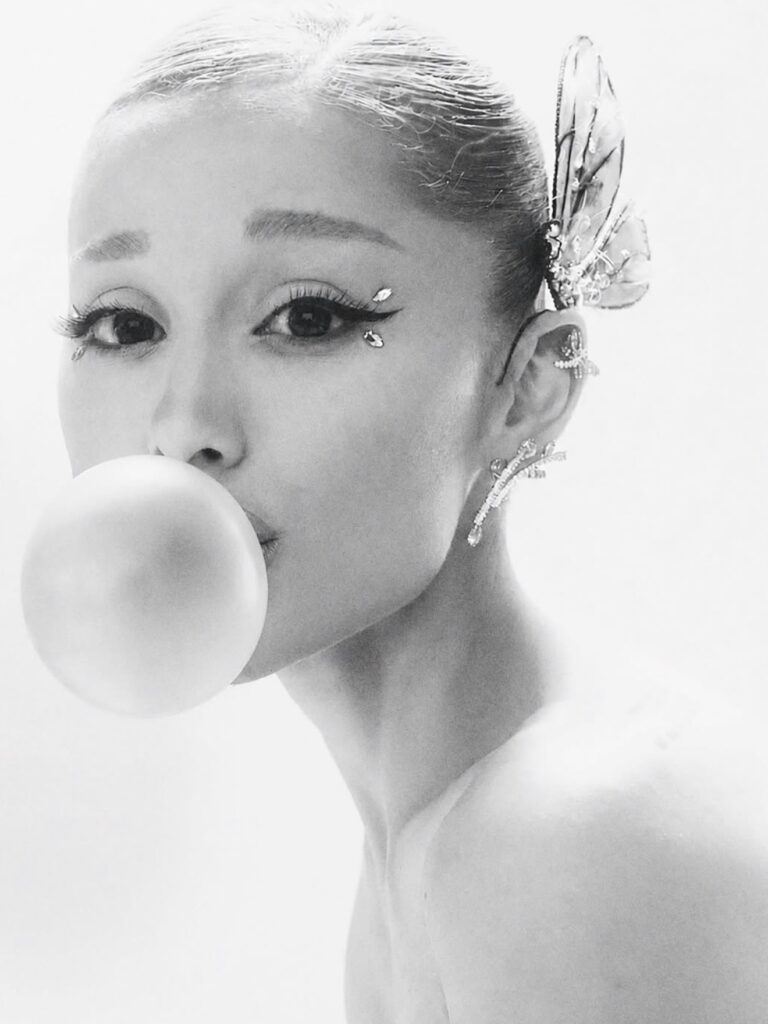
Ariana Grande has spent much of her life under public scrutiny. In recent years, however, commentary about her appearance has intensified, particularly during the publicity surrounding the Wicked films and following the release of her latest music video.
The video presents an apparently feminist message about the relentless judgement directed at women in the entertainment industry. Grande plays an aspiring performer attending a series of auditions, where panels of male casting directors repeatedly criticise both her performance and appearance. With each rejection, she attempts to change herself until she finally turns violently against the men judging her, a deliberately exaggerated conclusion framed as an act of resistance.
Yet rather than concentrating exclusively on the video’s criticism of the entertainment industry, much of the subsequent discussion focused on Grande’s body. Some commentators described her as noticeably thin and questioned what message her appearance might communicate to younger fans.
Others responded that the discussion was simply another instance of the public treating a woman’s body as communal property.
This was the theme that the Global Story from the BBC covered last week. “I need us to stop commenting on women’s bodies. We’ve got to knock it off,” one critic argued.
The debate has reopened a difficult question: where, if anywhere, is the boundary between legitimate concern and body-shaming?
‘There are many different ways to look healthy’
The Global Story highlighted that Grande has previously made clear that she does not welcome public speculation about her appearance or health. In a 2023 video, she asked people to become “gentler and less comfortable commenting on people’s bodies”. She explained that the body some observers had identified as her “healthiest” had, in fact, reflected a particularly difficult period in her life.
“I was on a lot of antidepressants and drinking on them and eating poorly,” she said at the time, adding that she had been at one of the lowest points of her life when she looked the way others considered healthy.
Her comments challenged a central assumption underlying discussions of celebrity bodies: that health can be reliably determined from physical appearance. Grande returned to the issue during the 2024 publicity tour for Wicked, arguing that society had become far too comfortable commenting on how other people look and speculating about what might be happening in their private lives.
Does celebrity change the boundary?
Those defending discussion of Grande’s appearance argue that celebrity creates a more complicated relationship between privacy and public influence. Grande is not only an individual but also an artist whose image forms part of her public work. The Global Story notes that she has millions of fans, including girls and young women who may interpret celebrity appearances as standards to emulate.
From this perspective, analysing the imagery presented in a music video is not necessarily equivalent to approaching a private person and commenting on her weight. Art is released for public interpretation, and viewers inevitably respond to both its intended message and its visual presentation.
Nevertheless, this argument carries substantial risks. It can turn an artist’s work into justification for intimate speculation about her health, diet or medical history. It can also reproduce the very behaviour the video seeks to criticise: evaluating a woman’s message through judgements about whether her body is acceptable.
Grande’s celebrity status may make her appearance highly visible, but visibility is not the same as consent. Nor does influence give the public reliable knowledge of her health. The language of concern can also conceal a familiar form of body-shaming.
A long history of policing women’s appearance
The current debate is part of a much older culture of scrutinising women in public life. The Global Story episode also focused on the historical background of policing how a woman looks.
This culture intensified during the 1990s and 2000s as aggressive diet culture converged with the growing influence of paparazzi photography and celebrity magazines. Public figures who had previously exercised some control over their published images were increasingly photographed without preparation while carrying out ordinary activities.
Magazines encouraged readers to search for perceived imperfections by circling parts of women’s bodies and attaching derogatory labels to them. As the show highlights, terms such as “muffin top”, “cankles” and “bingo wings” entered popular vocabulary and taught a generation of women to divide their bodies into individual problems requiring correction.
The criticism was also strikingly contradictory. Women could be condemned for being too large, but exceptionally thin women were subjected to similarly intrusive and cruel commentary. The ideal remained deliberately unattainable: women were expected to be thin, but not too thin; youthful, but not artificial; attractive, but not apparently preoccupied with their appearance.
This system ensured that almost any female body could be presented as evidence of personal failure.
Public demand helped sustain this form of media coverage. Celebrity magazines discovered that supposedly exposing the physical imperfections of famous women could be commercially successful. Their appeal was sometimes defended as a way of challenging unrealistic beauty standards by showing that celebrities did not always resemble their carefully produced images.
There may have been an element of reassurance in discovering that famous women had ordinary bodies. But this apparent democratisation was frequently achieved through humiliation. Instead of questioning why women were expected to meet impossible standards, the culture punished celebrities for failing to embody them at every moment.
The sense of public entitlement is still out there
Ultimately, the debate surrounding Grande shows that the language used to discuss women’s bodies may have changed, but the underlying sense of public entitlement has not entirely disappeared. Open ridicule is now more readily challenged, yet speculation can return under the more acceptable language of health, concern and social responsibility. Whatever its stated intention, such commentary still risks reducing a woman to her appearance and assuming knowledge that the public does not possess.
Grande’s experience also exposes an enduring contradiction: female celebrities are expected to serve as role models while being denied control over the boundaries of their own bodies. Public images and beauty standards can and should be critically examined, particularly in relation to their influence on younger audiences. But this can be done without diagnosing individual women or turning their bodies into objects of collective surveillance. The more important question is not whether Grande conforms to a particular ideal, but why women’s bodies continue to be treated as public problems requiring constant evaluation.