

Standing Together, the grassroots movement that has organised Jews and Arabs under one roof for ten years in Israel, is entering October’s general election with a newly founded party.
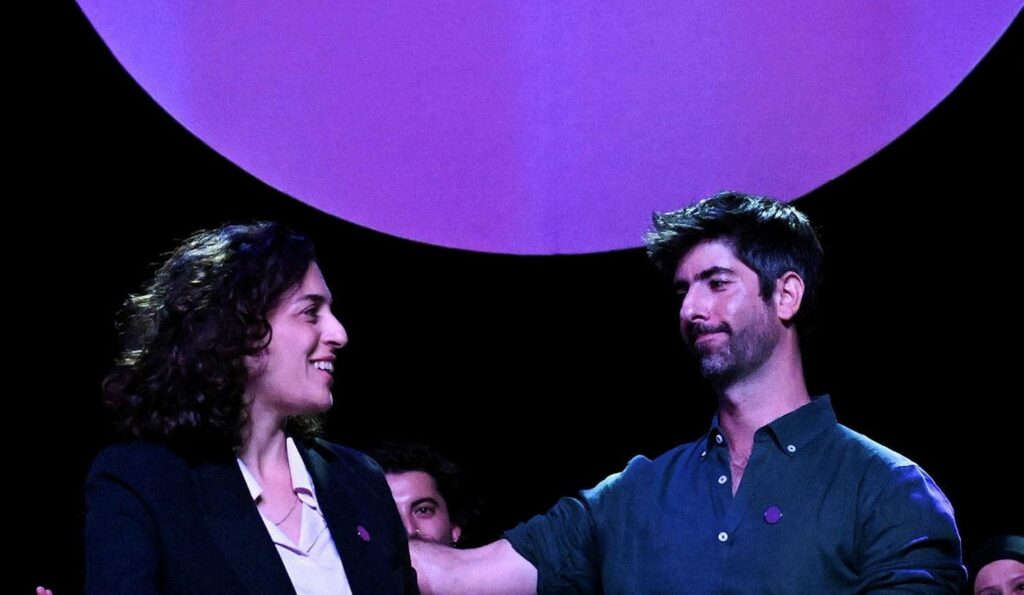
According to a report by Vera Weidenbach in the Israeli newspaper Haaretz, Standing Together, the grassroots movement that has organised Jews and Arabs under one roof for ten years, is entering October’s general election with a newly founded party. The announcement by “There Is Room for All of Us” (Makom Lekulanu) that it built its candidate list on the principle of equal representation, both between Jews and Arabs and between women and men, gave us hope at a time when the possibility of new parties is being discussed in Turkey.
The Politics of Hope
The party is led by the movement’s founders, Alon-Lee Green and Rula Daood. The pair, who became the faces of the joint Jewish-Palestinian peace struggle throughout the war in Gaza and gained international recognition, will step back from the movement during the election campaign.
As Daood describes it, the party speaks to people who have stayed outside institutional politics for years and lost their belief that the system can bring real change. Daood calls this the “politics of hope,” and stresses that this hope comes not from empty promises but from the concrete work the movement has accumulated over the past decade. They ask the public not to believe in promises about the future, but to look at what has already been achieved. Since 7 October 2023, the movement’s membership has grown from a few hundred to around 7,000 by the end of 2025.
Women’s Representation at the Centre of the List
One of the party’s most striking claims concerns women’s representation. According to campaign manager Uri Weltmann, there is not a single party in Israeli politics today led by a woman. The new party, by contrast, is building both its leadership and its candidate list on gender equality between women and men.
This is not an abstract principle. It is also part of a concrete electoral strategy. The party aims to bring two groups within Arab society to the ballot box: women and young people. According to data cited by Weltmann, only 40 per cent of Arab women intend to vote. While there are several reasons behind this picture, a lack of representation is the foremost among them. In other words, women staying away from politics is read not as “indifference” but as the absence of an address that would make them visible.
Not Dividing the Pie, but Growing It
The party is organisationally, financially and legally independent of the Standing Together movement. Yet it carries into politics the ideas the movement has defended since its founding in 2015: equality between Jews and Arabs, peace against war and occupation, social justice, and climate justice. Weltmann describes these themes not as separate but as interwoven issues.
The arrival of a new party on the scene also brings a risk: further splitting the votes of an opposition whose common goal is to bring down Prime Minister Benjamin Netanyahu’s far-right government. For a party to enter parliament in Israel, it must clear the 3.25 per cent electoral threshold; the votes received by a party that fails to clear it go to waste. For this reason, if “There Is Room for All of Us” appeals to the same electorate, it could also draw away votes from the centre-left Democrats or from Hadash, another Jewish-Arab party.
The party leadership is aware of this criticism. They sum up their strategy as “not dividing the pie further, but growing the pie.” They aim to increase overall turnout by bringing into politics voters, especially Arab voters, who until now had not planned to go to the ballot box. The movement also states that it will remain committed to the strategic goal of bringing down Netanyahu, and is prepared to accept even a centre-right coalition if necessary; it says that if it sees itself slipping into the position of a “vote-splitter,” it will not take part at the ballot box on election day.
The party notes that in polls it commissioned from an external organisation, it appears at a level close to three parliamentary seats, leaving it one seat short of the number needed to cross the threshold. There are three months until the official submission of the candidate list, and according to Weltmann, this amounts to “an eternity” in Israeli politics.
Why Does This Concern Us?
The “There Is Room for All of Us” experiment is worth watching for everyone engaged in the struggle for equality and peace. This is because women’s representation here is constructed not as window dressing or a mere quota matter, but as both a moral principle and a concrete strategy that mobilises voters. Women staying away from the ballot box is treated not as fate, but as a void created by the absence of representation; and the solution lies in bringing women forward as the agents who will fill that void.
In a region where divisive identity politics have sharpened, the attempt to bring different peoples and genders together on the same list with equal weight is a concrete test of the idea of “struggling together.” Whatever the outcome, this attempt offers an example worth reflecting on for those who carry the agenda of peace and equality.