

Across Turkey, women with different lifestyles, beliefs and public identities are increasingly being targeted by the same conservative-authoritarian effort to police their bodies, voices and choices. What may appear to be separate controversies forms part of a broader attempt to impose moral boundaries on all women, writes Gülseren Onanç, founder of the Equality, Justice and Women Platform in Turkey,
Gülseren Onanç
I have been away from Turkey for more than a month. I have also been spending that time in countries ranked among the highest in the world for gender equality: first Denmark, then Norway and now Sweden. As I dream about how we might make Turkey more like Sweden, the news from home reminds me just how difficult our task is.
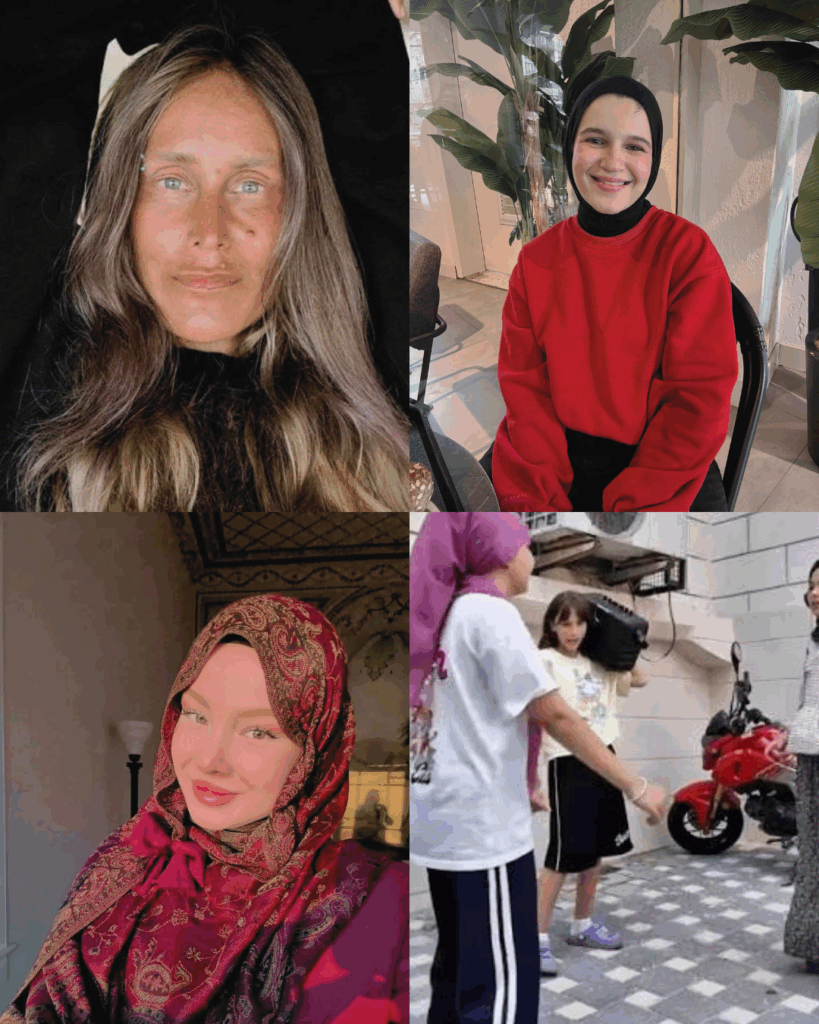
In recent days, I heard that a young woman who wears a headscarf had been arrested. Then came the detention of photographer Bennu Gerede, who was taken into custody and placed under an international travel ban after an ex officio “obscenity” investigation was opened over her on‑air description of a necklace she wears as a “portable vibrator,” alongside escalating online attacks and calls for criminal action against Nesibe Yıldırım, a religious woman content creator targeted for offering Islamic interpretations outside male‑dominated religious authorities.
Finally, the Eyüpsultan District Mufti’s Office published a staged video as part of its “My Morality” (Benim Ahlakım) values education project, coordinated by the Istanbul Mufti’s Office. In the video, one girl says she enjoys listening to and dancing to the all‑female pop girl group Manifest, while another, portrayed as a “Muslim girl”, condemns the group and its lifestyle as immoral. By presenting these positions through children, the video promotes a conservative Islamic understanding of morality as the proper basis for everyday life.
Together, these incidents made me think that those policing women’s morality in Turkey are joining forcesand that we, too, need to close ranks.
What Is Fatma’s Crime?
I had never even heard of Fatma Soydaş. Had I been in Turkey, I would not have been able to access her Instagram or TikTok accounts, and I would not have understood why this young woman had been targeted. Looking at the accounts I could access from abroad, she did not seem any different from any other Generation Z social media influencer.
So, what is Fatma Soydaş’s crime? An investigation was launched into the social media content creator over her posts, under provisions of the Turkish Penal Code concerning “insulting religious values” and “obscenity”. Fatma was first detained and then remanded in custody. The legal proceedings are continuing. At the heart of the case is the fact that Fatma wears a headscarf.
In other words, Fatma’s crime is being a woman who wears a headscarf.
A group of conservative men effectively declared, “A woman who wears a headscarf cannot behave like this; prosecutors must intervene immediately.” Men within the judiciary who share the same mentality promptly acted on their demands.
Bennu Gerede: Why Do Men Find a Woman Carrying a Vibrator Threatening?
Photographer Bennu Gerede is someone I knew of but did not follow. Whenever she appeared on my feed, I admired her free-spirited attitude and Madonna-like style.
During a programme in which she appeared, Bennu spoke about the portable vibrator hanging around her neck. And apparently, merely mentioning a vibrator was enough. Like Fatma Soydaş, Bennu Gerede became the subject of an investigation for “obscenity”. Access to the YouTube programme was blocked, and she was later released subject to a travel ban.
If the conservative judiciary believes it has sent women a message, this is the message I received: women should not wear their vibrators around their necks or display them openly.
But seriously, why do conservative men find a woman carrying a vibrator so threatening?
Nesibe Yıldırım: A Secular, Religious Woman Who Entered the Domain of Self-Appointed Male Authorities on Religion
I had not previously followed Nesibe Yıldırım, the social media content creator against whom calls for arrest have been made. I have now started following her as well. After looking at a few of her posts and at the men making grand pronouncements about her, I immediately understood her “crime”.
Nesibe’s crime was entering a domain claimed by self-appointed male authorities who believe that interpreting religion belongs exclusively to them. Nesibe subsequently announced that she was taking a break from producing content.
The Eyüpsultan Mufti’s Video
The Eyüpsultan Office of the Mufti produced its video as part of its campaign against a six‑member Turkish all‑female pop girl group, Manifest. More than anything, the video reveals the institution’s helplessness. It is an extremely crude production that attempts to impose the ideal of the “good Muslim girl” by creating division among girls. Women’s organisations were right to condemn it.
Two phrases in the video particularly caught my attention. The first was: “What is it to you? Are you the mayor of Çorum?”
Children and young people in Çorum have been asking Mayor Halil İbrahim Aşgın to invite Manifest to perform in the city. He rejected their request to perform, declaring: “As long as we are here, no Manifest girl will enter Çorum. We cannot allow them to contaminate our city.”
The other phrase was: “Live according to the Qur’an, not according to applause.”
In other words: do not enjoy what the world has to offer; do not sing or dance freely; and do not look up to groups such as Manifest, whose members are highly visible in public life.
Manifest: Why Have These Young Women Caused So Much Discomfort?
What lies behind this hostility towards Manifest? The musical group, composed of six young women, became the subject of an investigation into allegations of “indecent conduct” and “exhibitionism” following a concert in Istanbul in 2025. After giving statements, the group’s members were released under judicial supervision, while access to footage from the concert was blocked. Yet the controversy surrounding Manifest has refused to disappear.
The real problem is that while some conservative politicians and male-dominated institutions portray the group’s stage costumes and dancing as symbols of “moral degeneration”, young people continue to embrace Manifest. Conservative men are experiencing the frustration of discovering that they can no longer control young women, even within their own political base.
Tickets for Manifest’s paid concert in Gaziantep sold out rapidly, while children in Çorum have asked the mayor to bring the group to their city. Calls to cancel or prevent their concerts have increased the group’s visibility rather than diminishing it.
Several months ago, former AK Party MP for Gaziantep Şamil Tayyar commented on this contrast. He noted that thousands of young people were willing to pay to attend a Manifest concert, while free concerts of religious hymns attracted far smaller audiences. “In that case, with whom or what should we really be angry?” he asked. “Society’s consumption habits, behaviour and understanding of values are changing rapidly. And a deeper social shift is underway.”
Perhaps the real issue is not Manifest’s dancing or clothing. Manifest represents the visibility and self-confidence of young women, as well as the cultural preferences of the new generation. It leaves institutions such as the Eyüpsultan Office of the Mufti feeling helpless and drives them to make videos of this kind.
EŞİK: “These Are Not Isolated Incidents”
Numerous women’s organisations, including the Women’s Platform for Equality (EŞİK), have responded to these developments.
In its statement, EŞİK made the following assessment:
“The arrest of Fatma Soydaş, the investigation launched against Bennu Gerede and the targeting of Nesibe Yıldırım are not isolated incidents. They form part of policies intended to discipline women and of a system of moral policing conducted through the judiciary.”
Women’s organisations have drawn attention to three common features:
- Increasing control over women’s bodies
- The restriction of freedom of expression
- The growing transformation of social media into an organised mechanism for reporting and targeting individuals
Turkey’s conservative-authoritarian government regards control over women’s bodies and lives as necessary to its own survival. It is attempting to use that control as one of its most effective tools for reshaping society.
Why Do Authoritarian Governments Seek to Control Women?
Authoritarian governments do not want women to become free, because women’s liberation also means the liberation of society. This is why the following questions become matters for political intervention:
How women should dress…
How they should speak…
How they should be mothers…
How many children they should have…
With whom they should form relationships…
What they may or may not say…
Compulsory veiling in Iran…
The denial of girls’ right to education in Afghanistan…
Restrictions on abortion rights in Poland…
The struggle over abortion rights in the United States…
“Traditional family” policies in Hungary…
Although these developments are taking place in different countries, authoritarian governments share a common objective:
To restrict and shape women’s lives.
The issue we face today, therefore, does not concern Fatma Soydaş, Bennu Gerede or Nesibe Yıldırım alone. It concerns the erosion of a shared space of freedom for women who lead very different lives.
When young women defend their freedom, they are also defending democracy in Turkey.
Standing with women who live freely in defiance of the morality police is not only about defending women’s rights. It is about defending democracy.
Let us close ranks!