

Sahar Maranlou revisits Shahrnush Parsipur’s groundbreaking feminist novella Women Without Men, which follows five women seeking freedom in a garden outside Tehran. Set against the 1953 coup, the novel shows how political upheaval, patriarchy and foreign intervention are experienced through women’s bodies, sexuality and domestic lives.
Sahar Maranlou, Royal Holloway, University of London
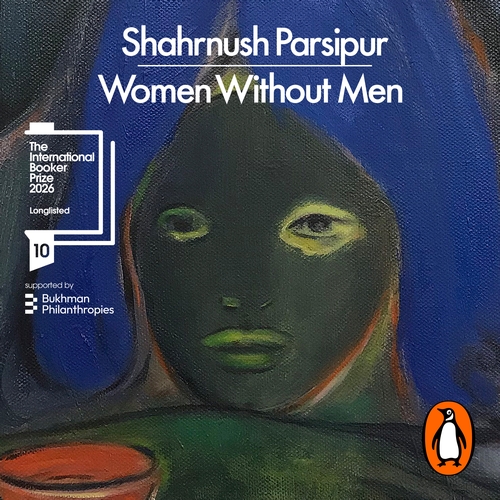
Women Without Men by Shahrnush Parsipur is an innovative feminist story set in Iran. The story follows five women and the circumstances that make them leave their lives to start anew in a garden on the outskirts of Tehran.
Written in the late 1970s, it was immediately banned on publication. Shortly after, Parsipur was arrested and jailed for her frank and defiant portrayal of women’s sexuality. This groundbreaking book is now available for the first time in the UK, translated by Faridoun Farrokh.
Set against the backdrop of the 1953 CIA-backed coup in Iran, the story deliberately shifts the lens of history away from the big politics to focus on its impact on intimate, gendered spaces. In doing so, Parsipur frames national upheaval as something lived and inscribed upon women’s bodies and interior lives.
The novel insists that authoritarianism doesn’t begin in the halls of power; it begins in the household within layered patriarchal systems that confine women’s autonomy. Parsipur’s blending of realism and magical elements unsettles conventional narrative authority and mirrors the instability of a society in crisis. The personal and the political are inseparable: women’s silences, desires and acts of refusal become subtle yet radical forms of resistance.
What makes this novel enduring is its refusal to separate the personal from the political. The magical elements are not decorative; they expose emotion that realism alone cannot capture. The garden the women flee to is not an escape from reality, but a feminist space where reality is reimagined.
The novel has sadly taken on an urgency and relevance in the face of the the US and Israel’s war on Iran. It reminds readers that foreign intervention often intensifies internal authoritarianism. By revisiting the legacy of the 1953 coup, the book encourages readers to see today’s crisis not as an isolated eruption. Instead, it is part of a deeper historical continuum, shaped by external intervention and power structures within Iranian society.
Through intimate storytelling, Parsipur invites readers to confront the cultural assumptions that have shaped women’s lives for generations. To read Women Without Men is to enter a layered narrative that is at once poetic, historical and contemporary. It bears to witness how deeply gender norms are embedded in everyday life, and how quietly, yet powerfully, women resist them.
Sexuality
In Women Without Men, virginity is an ideological construct by which a woman’s worth is regulated. Through the characters of Faezeh and Munis, we see how chastity functions as a mechanism of control long before any formal punishment is imposed.
Faezeh embodies internalised patriarchy, believing a woman’s honour depends entirely on social perception and reputation to survive. When she and Munis are sexually assaulted, the violence is overshadowed by shame.
The metaphor “watering the earth”, used by a man to describe sexual penetration, is chilling because it recasts violation as something natural and productive. It depicts a woman as if she were soil to be cultivated, rather than a person with agency.
By framing assault in agricultural terms, patriarchal language erases harm and presents male entitlement as biological inevitability, while placing the burden of “dishonour” on the woman’s body. This symbolic logic mirrors the broader Iranian legal and social framework in which virginity carries material and moral weight, reinforcing the idea that women’s bodies are sites of regulation rather than autonomy.
The Iranian Civil Code of 1931 codified male guardianship and authority in marriage and family matters. In this context, virginity becomes not only a cultural expectation but part of a larger system in which women’s bodies are governed by both family and state.
Zarrinkolah’s narrative offers one of the most unsettling critiques of patriarchal objectification in Women Without Men. Zarrinkolah is a prostitute who begins to see all of her clients as headless men. It is an attempt to “cure” this condition through an act of purification that leads her to abandon prostitution.
Zarrinkolah’s journey isn’t a simple redemption, but a reconfiguration of subjectivity. By shifting from being seen as nothing more than a body to recognising herself as a person with her own thoughts, emotions and agency, she disrupts the cultural logic that renders women’s bodies interchangeable and morally policed. Her withdrawal from prostitution is not a return to purity, but a refusal of the system that defined her solely through male consumption.
The stillness of marriage
Farrokhlaqa’s story reveals the psychological and social confinement of marriage. Her marriage was a “32-year-old habit of not moving”. Patriarchal expectations have infected her, and she has become self-policing. She does not need to be actively restrained; she restrains herself. However, she no longer experiences her lack of freedom as oppression but as natural and inevitable.
Her response to widowhood is not retreat but a shift from passivity to agency. She purchases the garden, transforming inherited wealth into spatial autonomy, creating space for “women without men”. Her liberation is, therefore, negotiated by unlearning the stillness marriage imposed. Through her, Parsipur suggests that domestic patriarchy is sustained not only by law but by cultural perceptions that normalise women’s obedience to husbands.
The garden functions as a feminist counter-public sphere outside patriarchal governance. Within its walls, women work, speak and rest without male supervision. Iranian women’s groups have created similar spaces of solidarity, which were fragile yet transformative. They demonstrated that collective awareness could exist even within repressive conditions before and after the Islamic Revolution.
Parsipur does not allow the garden to become utopia, however. The women do not remain there, most return to Tehran and reenter life. Liberation cannot survive in isolation from society, Parsipur tells us. This narrative choice mirrors Iranian women’s rights history: reforms have emerged through resistance, reversal, and renewed struggle – not through escape.
Women Without Men is not simply a novel about five women seeking refuge in a garden. It is about freedom, embodiment and the struggle for equal dignity. Shahrnush Parsipur gives us women who question, transform, challenge and resist.
This article features references to books that have been included for editorial reasons, and may contain links to bookshop.org. If you click on one of the links and go on to buy something from bookshop.org The Conversation UK may earn a commission.
An earlier version of this article incorrectly stated that the March 2026 translation of Women Without Men was the first full English translation. In fact, it was the first English translation in the UK. The text has been updated.
Sahar Maranlou, Lecturer in Law and Socio-legal Studies, Royal Holloway, University of London
This article is republished from The Conversation under a Creative Commons license. Read the original article.