

Dolly Parton, who died at the age of 80, was an artist embraced by an extraordinarily broad range of Americans, from the labour movement and conservative rural voters to the LGBTQ+ community and traditional country music audiences. The New Yorker acknowledged her unifying power with the phrase “The United States of Dolly Parton”. At a time when our world is becoming increasingly divided and polarised, we felt it was important to understand her legacy.
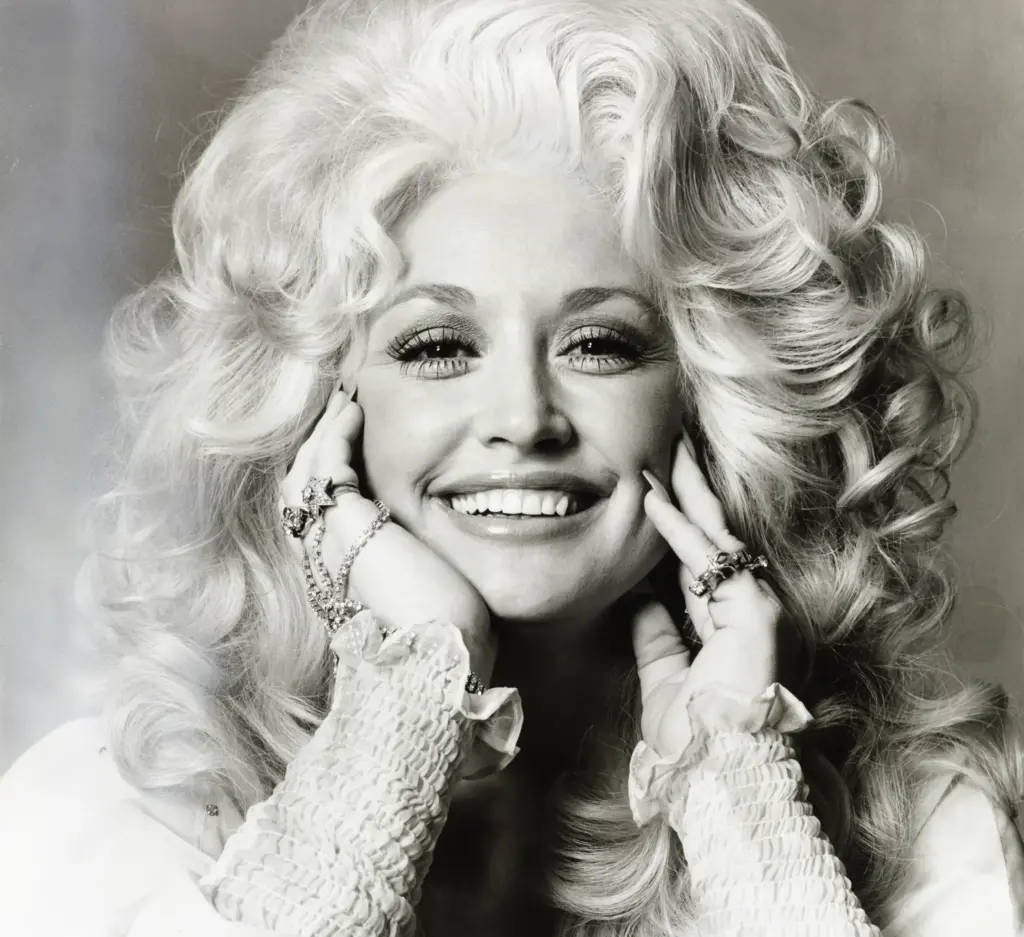
Parton was born in 1946 in rural Tennessee, in the foothills of the Great Smoky Mountains. Her father was a tobacco farmer, while her mother had given birth to 12 children before the age of 35. According to the Financial Times obituary, her family could not afford to pay the doctor when she was born, so they paid him with a sack of cornmeal. Parton later joked: “I’ve been making money from dough ever since.”
She did not turn her poverty into a narrative of victimhood; instead, she claimed it as part of her identity and agency. In her 1971 song “Coat of Many Colors”, which describes being mocked at school for wearing a coat sewn from scraps of fabric, she sang: “They didn’t understand it, for I felt I was rich.” She always treasured the labour and love that her mother had stitched into every seam.
Her background formed the basis of her connection with the working class. Following her death, the Democratic Socialists of America described her as a “working-class hero”. The theme song from the 1980 film 9 to 5 became a labour anthem expressing the daily exhaustion of women office workers and was even used in Hillary Clinton’s election campaign years later. Although Parton herself did not explicitly take sides, the song became a symbol of workers’ struggles.
Dollywood, the theme park she established in 1986 to create jobs in the region where she was born, and the Imagination Library, inspired by her father’s inability to read and write, were concrete expressions of this class consciousness. The library has distributed free books to hundreds of millions of children worldwide.
The One Figure Who Transcended Political Polarisation
In a recent University of Massachusetts Lowell survey, Parton emerged as the only public figure to receive approval ratings above 50 per cent among Democrats, Republicans and independent voters alike.
This broad appeal became particularly visible after her death. While the Democratic Socialists of America called her a working-class hero, President Donald Trump said: “There was never anyone like her, and there never will be.” A 2020 Financial Times profile made a similar observation, noting that her fan base transcended even the most divisive boundaries whether between red and blue states, country and rock, or religious and non-religious Americans.
The secret of this broad acceptance may not have been that Parton avoided taking sides, but that her position was rooted in her identity and her work. She deliberately kept her philanthropic activities outside party politics, but this did not make her unprincipled. When the issues arose, she openly defended LGBTQ+ rights and marriage equality. In 2020, she expressed her support for Black Lives Matter by asking: “Do we think our little white asses are the only ones that matter? No!”
The Diplomacy of Silence
Parton’s refusal to align herself fully with any political camp was not accidental but a conscious choice. According to an article in The New Yorker, a petition emerged in Tennessee in the summer of 2020, when monuments glorifying the slave trade and genocide were being removed. It called for statues of “men who sought to tear this country apart” to be replaced with a monument to a woman who had dedicated her life to bringing people together. The petition quickly attracted 23,000 signatures.
Considering that country music has traditionally developed within a conservative and partisan culture, the fact that Parton was equally respected both within this community and in very different musical circles from Björk to Nicki Minaj represented a remarkable diplomatic achievement.
Parton often maintained this diplomacy through evasive answers and humour. When she starred in 9 to 5, the 1980 film about a revolt by women office workers, she carefully avoided associating it with the women’s liberation movement. “I’m not saying I’m not for everybody’s rights,” she said. “I just don’t want to get involved in a political issue.”
When asked in 2016 whether she supported Hillary Clinton, she avoided giving a direct answer and instead joked about running for office herself. As reported by The New Yorker, writer Sarah Smarsh summarised Parton’s approach in a single word: “grace”. For Parton, this meant bringing together the country’s different sensibilities through good deeds and an inclusive call to “come home”, rather than choosing one side.
An Icon, but Never a Victim
Even within country music’s tradition of providing women artists with relatively greater room for agency, Parton challenged the boundaries of a sexist industry. Early in her career, a record executive declared that “the girl’s voice is no good”. Her mentor, Porter Wagoner, nevertheless persisted, and their partnership became a success.
When Elvis Presley’s manager, Colonel Tom Parker, demanded half the publishing rights to “I Will Always Love You”, Parton rejected the offer and retained control of the song. That decision allowed her to keep the rights to a work that later became one of the world’s bestselling singles through Whitney Houston’s rendition.
One of her most frequently quoted remarks about her appearance “It costs a lot of money to look this cheap” was not an act of self-deprecation. It reflected the irony of a woman who maintained complete control over her image. Writing in The Guardian, Emma Brockes connected this attitude to the “utterly sincere” essence of LGBTQ+ camp culture. Parton could make fun of her appearance without ever compromising the seriousness behind it.
A Woman Who Lived Feminism Without Naming It
One of the clearest examples of Parton challenging established boundaries was her relationship with Porter Wagoner, with whom she worked for many years. According to The New Yorker, Sarah Smarsh interprets Wagoner’s controlling behaviour, interfering in everything from the songs Parton performed to their publishing rights, as an example of working relationships in which women’s labour is rendered invisible.
When Parton decided to end the partnership in 1973, she wrote two songs during the same session to explain her departure to Wagoner: “I Will Always Love You” and “Jolene”. One was a farewell, while the other gave voice to a woman declaring her independence. Both subsequently became classics of music history.
For many years, Parton distanced herself from the label “feminist”. Yet this was precisely the argument advanced in Smarsh’s book: Parton was not a spokesperson but an example: a woman who lived feminism without naming it.
In a 2020 Time100 interview, she finally gave a direct answer: “I suppose I am a feminist if I believe that women should be able to do anything they want.” Her support for Black Lives Matter during the same period also demonstrated where the limits of her silence lay.
A Legacy That Embraced Everyone and Looked Down on No One
Parton’s legacy is too broad to be confined to a single identity or political position. She became a symbol of labour struggles, a figure embraced by the LGBTQ+ community and a source of pride for conservative rural voters. Following her death, she was one of the rare figures praised by both the socialist movement and the sitting president. Yet she achieved this without compromising her identity, background or values.
Her solidarity was not limited to words. Alongside the Imagination Library, operated through the Dollywood Foundation, she established an emergency fund for families affected by the 2016 Smoky Mountain wildfires in her home county of Sevier. In 2020, she donated $1 million to Vanderbilt University Medical Center to support coronavirus research. The donation directly contributed to research that later helped produce a vaccine. In each case, she gave quietly and consistently, without placing publicity at the centre of her actions.
Her story reminds us of a truth that we continually emphasise: equality and solidarity are built on the foundations of our shared humanity. Beginning life as the daughter of a poor agricultural worker, Parton brought millions of people together without excluding anyone or looking down on others, while retaining ownership of her labour and her voice.
She leaves behind an exemplary life story.
Sources
Emma Brockes, “Goodbye, Dolly Parton: a gay icon whose appeal reached across age, class and politics, and into the Maga heartlands”, The Guardian, 26 August 2026.
“Dolly Parton was at once larger than life and down to earth” (obituary), Financial Times.
Elaine Moore, “Dolly Parton, the country singer trying to cure the world’s ills”, Financial Times, 20 November 2020.
Review of Sarah Smarsh’s She Come by It Natural: Dolly Parton and the Women Who Lived Her Songs (Scribner, 2020), The New Yorker, 2020.