

Following the death of Marjane Satrapi at the age of 56, tributes have poured in for the Iranian-French artist whose graphic memoir Persepolis introduced millions of readers to life in revolutionary Iran. Yet Satrapi’s legacy extends far beyond the work that made her internationally famous. Over a career spanning three decades, she established herself as a writer, filmmaker, painter, and public intellectual, using her art to champion freedom of expression, women’s rights, and democratic values
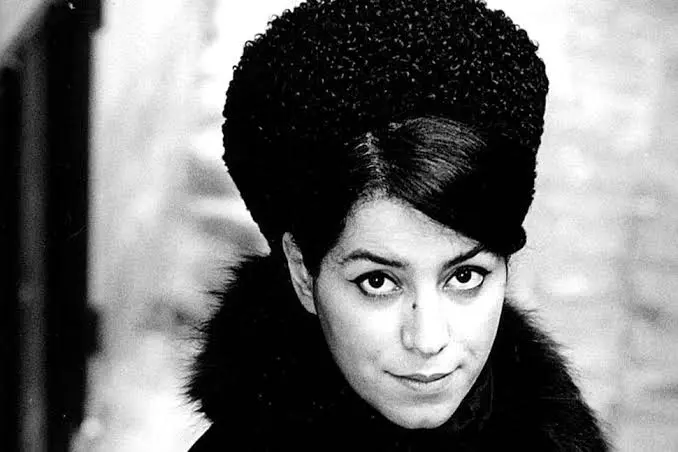
The death of Marjane Satrapi at the age of 56 marks the loss of one of the most influential cultural figures of her generation. Best known as the author of Persepolis, the graphic memoir that transformed global understanding of revolutionary Iran, Satrapi was far more than a celebrated writer. Over three decades, the Iranian-French artist established herself as a novelist, filmmaker, painter, public intellectual, and outspoken advocate for freedom of expression, women’s rights, and democratic values. Through her work, she challenged both authoritarianism in Iran and simplistic Western representations of the Middle East, becoming one of the most internationally recognised Iranian voices in contemporary culture.
Born in Rasht, Iran, in 1969 and raised in Tehran, Satrapi came of age during one of the most turbulent periods in her country’s history. She witnessed the 1979 Islamic Revolution as a child and later lived through the Iran-Iraq War before leaving Iran at the age of fourteen to study in Austria. These experiences would shape the themes that ran throughout her work: exile, identity, repression, belonging, and resistance.
Those themes found their most powerful expression in Persepolis, published between 2000 and 2003. Combining stark black-and-white illustrations with personal storytelling, the memoir chronicled Satrapi’s childhood during the revolution and her experiences growing up between Iran and Europe. The book became an international bestseller, was translated into numerous languages, and was later adapted into an award-winning animated film. As The New York Times noted, Persepolis introduced millions of readers to “the struggles of ordinary Iranians” during one of the most consequential periods in modern Iranian history.
Yet Satrapi resisted being defined solely by her most famous work. Her subsequent books, including Embroideries and Chicken with Plums, explored the private lives of Iranians through stories of love, family, sexuality, and loss. Rather than focusing on governments or political leaders, Satrapi centred ordinary people, revealing the complexities and contradictions of Iranian society. Her work challenged stereotypes by presenting Iranians not as symbols of political conflict but as individuals navigating universal human experiences.
Beyond literature, Satrapi built a successful career in film. She co-directed the animated adaptation of Persepolis, which received international acclaim and an Academy Award nomination, before directing several feature films, including The Voices (2014) and Radioactive (2019), a biographical drama about Marie Curie. Her work across different artistic mediums reflected a lifelong commitment to storytelling and a belief in the power of culture to transcend political boundaries.
Political activism became increasingly central to Satrapi’s public life. Living in France but remaining deeply connected to developments in Iran, she was a consistent critic of censorship, political repression, and restrictions on women’s rights. Rather than engaging in conventional party politics, she used her public platform and artistic work to advocate for human rights and freedom of expression. Her activism was rooted in the conviction that art itself could serve as a form of resistance.
This commitment became particularly visible during the “Woman, Life, Freedom” protests that erupted across Iran following the death of Mahsa Amini in police custody in 2022. As NYT notes, Satrapi emerged as one of the movement’s most prominent international supporters, using interviews, public appearances, and collaborative artistic projects to amplify the voices of Iranian protesters. In 2024, she coordinated Woman, Life, Freedom, a graphic work bringing together artists, journalists, academics, and activists to document the protests and place them within the broader history of resistance in Iran. She described herself as the project’s “director,” helping to bring together multiple perspectives in support of a common cause.
Marjane Satrapi’s legacy extends beyond any single book, film, or political cause. Through her art, she gave voice to those living through revolution, war, and repression while reminding international audiences of their shared humanity. In doing so, she not only reshaped the graphic novel as a literary form but also became one of the most important interpreters of modern Iran for a global audience. Her work will continue to resonate wherever questions of freedom, identity, and belonging are debated.