

In her commentary, Begum Zorlu, PhD researcher at City, University of London, reflects on the gender policies of the candidates contesting to become the next prime minister of the United Kingdom.
In the summer of 2022, British politics was dominated by two seemingly unrelated developments. On the one hand, the United Kingdom experienced record-breaking temperatures, with unprecedented heatwaves disrupting transport networks, public services and daily life, while intensifying debates over the government’s preparedness for the climate crisis. On the other, Westminster was consumed by the Conservative Party leadership contest that would determine the country’s next Prime Minister following Boris Johnson’s resignation. Although these events appeared disconnected, they both highlighted broader questions about political leadership, governance and the priorities of the Conservative government at a moment marked by economic uncertainty, rising inflation and an escalating cost-of-living crisis.
The leadership contest was precipitated by the collapse of Boris Johnson’s premiership following months of political instability. Johnson had survived a succession of controversies, including repeated allegations concerning breaches of COVID-19 lockdown regulations (“Partygate”), questions over ministerial ethics, accusations of cronyism and nepotism, and growing criticism of his leadership style. However, a wave of ministerial resignations in July 2022 ultimately rendered his position untenable, forcing him to announce his resignation after losing the confidence of a substantial proportion of his parliamentary party. Following several rounds of voting among Conservative Members of Parliament, Liz Truss and Rishi Sunak emerged as the final two candidates, with the party membership entrusted with selecting Britain’s next Prime Minister. Importantly, both candidates had served in Johnson’s Cabinet and had remained loyal to his government throughout much of the political turbulence surrounding his premiership, raising questions about the extent to which the leadership election represented substantive political renewal rather than a change of personnel.
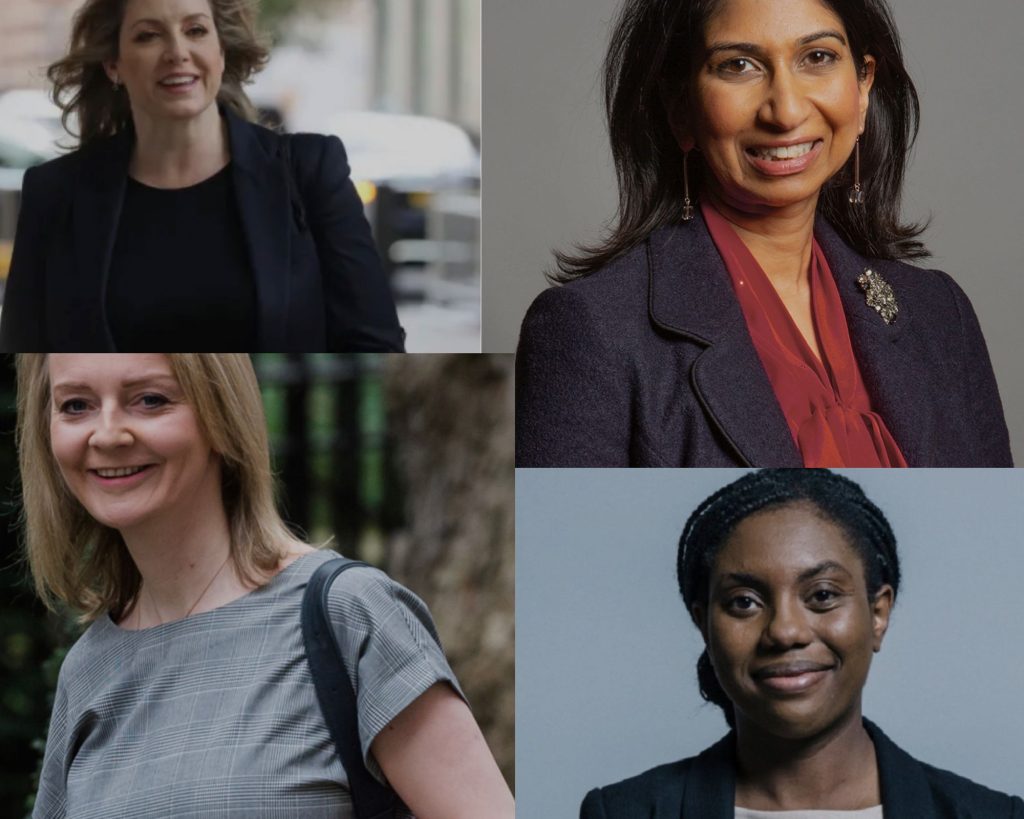
At first glance, the leadership contest appeared historically significant from the perspective of descriptive representation. The Conservative Party fielded one of the most diverse leadership races in British political history, with several women competing alongside candidates from ethnic minority backgrounds. The presence of politicians such as Kemi Badenoch and Suella Braverman was celebrated by many Conservative politicians and supporters as evidence of the party’s inclusiveness and its ability to promote women and ethnic minority politicians to the highest levels of government. Such developments were frequently contrasted with assumptions that progressive parties alone provide opportunities for historically underrepresented groups.
Yet the diversity of the candidate field also exposed the limits of equating descriptive representation with substantive representation. While the race featured an unprecedented number of women and minority candidates, none advanced a political programme centred on gender equality, anti-racism or the protection of marginalised communities. Instead, the contest unfolded within an ideological framework shaped by the Conservative Party’s broader positions on public spending, immigration, identity politics and culture-war issues. The candidates broadly endorsed a programme combining fiscal conservatism, support for restrictive immigration policies and scepticism towards contemporary social movements such as Black Lives Matter and trans rights. This reflected not only ideological continuity within the Conservative Party but also the broader political context of post-Brexit Britain, where debates surrounding national identity, sovereignty and cultural values had become increasingly central to electoral competition. At a time when the United Kingdom faced a severe cost-of-living crisis and widening social inequalities, critics argued that continued support for austerity-oriented economic policies would disproportionately affect women, low-income households and minority communities, despite the symbolic diversity represented within the leadership contest.
Among the candidates, Kemi Badenoch emerged as one of the most prominent representatives of the Conservative Party’s right wing. Born in London to Nigerian parents, Badenoch attracted considerable attention through her criticism of concepts such as white privilege and institutional racism, her opposition to expanding transgender rights and her broader critique of what she characterised as identity politics. She also generated controversy through statements questioning aspects of contemporary climate policy and comments that critics argued minimised or legitimised Britain’s colonial past. Although eliminated before the final stages of the contest, Badenoch’s campaign demonstrated the growing influence of culture-war politics within contemporary Conservative Party debates.
Similarly, Suella Braverman, whose parents emigrated from India during the 1960s, positioned herself firmly on the party’s right. A prominent supporter of the government’s policy of transferring asylum seekers to Rwanda for offshore processing, Braverman consistently adopted a restrictive approach to immigration and asylum policy. Following legal challenges to the Rwanda scheme, she argued that it was “time to complete Brexit and let the British people decide who can and cannot stay in our country,” framing migration control as an issue of national sovereignty and democratic self-government. Her campaign illustrated how immigration remained one of the defining ideological fault lines within the leadership contest.
Penny Mordaunt represented a somewhat different profile. Having spent almost two decades in Westminster, she became the first woman to serve as Secretary of State for Defence in 2019. Her political career also reflected longstanding engagement with transnational conservative networks, including participation in George W. Bush’s 2004 presidential campaign. Nevertheless, Mordaunt maintained broadly interventionist positions on defence and foreign policy, supported military engagement overseas and voted against proposals to establish a comprehensive inquiry into Britain’s role in the Iraq War. Although sometimes portrayed as representing the more moderate wing of the party, her record nevertheless reflected significant continuity with established Conservative positions on security and defence.
The final contest ultimately pitted Liz Truss against former Chancellor Rishi Sunak. Truss, who had begun her political career as a member of the Liberal Democrats before joining the Conservative Party, had held several senior Cabinet positions, including Secretary of State for Justice, Lord Chancellor and Foreign Secretary. Throughout the campaign she was frequently described as the candidate most closely associated with Boris Johnson’s political agenda and received the endorsement of several prominent Johnson allies, including Braverman. Her record in government had also generated controversy, particularly regarding foreign policy. Among the most widely discussed examples was her public support for British citizens volunteering to fight in Ukraine following Russia’s invasion, a statement that prompted criticism because participation in foreign conflicts raised complex legal and diplomatic questions. She also faced criticism over the government’s continued export of arms to Saudi Arabia despite ongoing concerns regarding the conflict in Yemen. Domestically, Truss repeatedly criticised what she described as “post-modernist” approaches to education and equality, arguing that schools devoted excessive attention to issues such as racism and sexism at the expense of literacy and numeracy. These interventions reflected a broader Conservative discourse positioning debates around equality and identity as distractions from educational standards and economic performance.
Throughout the leadership campaign, issues relating to gender identity and transgender rights occupied a remarkably prominent place in political debate. Rather than presenting competing visions for advancing gender equality or addressing structural inequalities affecting women, much of the discussion centred on restricting the rights of transgender people. International media observed this trend, with CNN describing the contest as becoming “a transphobic spectacle” because of the prominence of rhetoric directed towards transgender communities. At the same time, candidates’ broader parliamentary voting records revealed relatively limited support for measures concerning gender equality, climate action and refugee protection. Consequently, while the leadership contest represented an important milestone in terms of descriptive diversity, it did not signify a corresponding shift towards more inclusive or progressive policy agendas. Instead, it illustrated how the increasing diversity of political elites does not necessarily translate into substantive representation of women, minority groups or marginalised communities, demonstrating the distinction between symbolic representation and transformative political change.