

The resignation of Professor Jason Arday, a Black academic, from Cambridge following allegations of plagiarism and inaccurate references has fuelled a wider debate about race, equality and inclusion in British society.
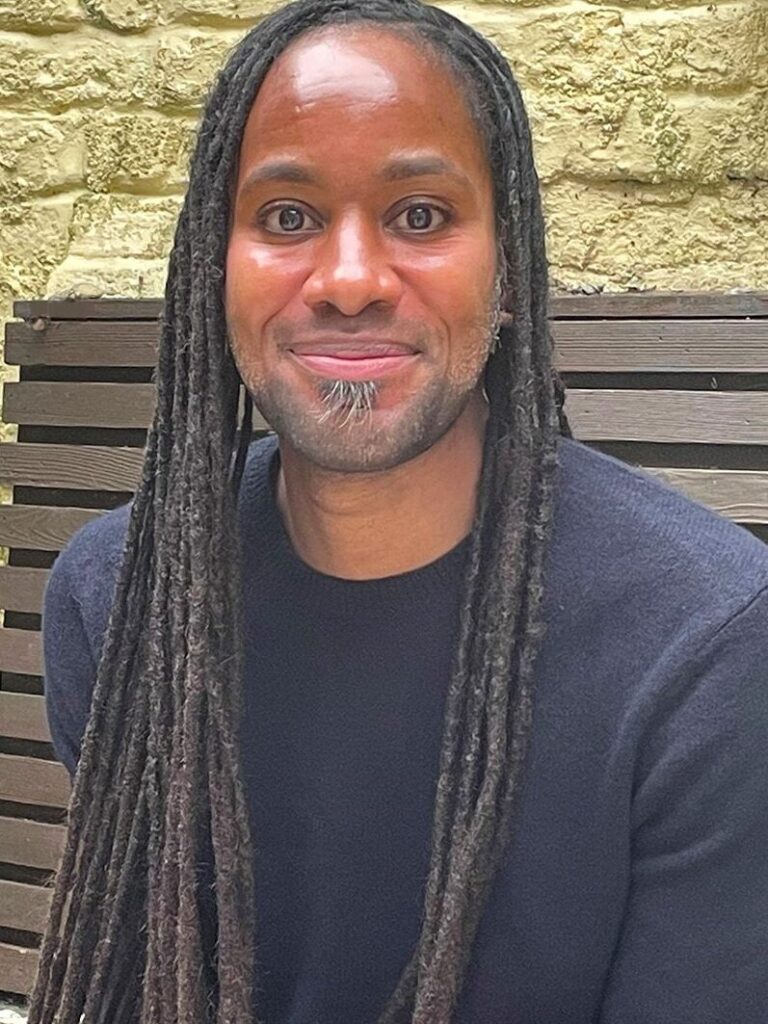
Photo: University of Cambridge
Throughout the week, Professor Jason Arday’s resignation from the University of Cambridge dominated the headlines and was discussed across Britain’s major news channels. For those who are not familiar, Arday was Cambridge’s youngest Black professor when he joined its Faculty of Education in 2023 and had built a reputation as one of the most celebrated figures in British academia. Born Jason Atta Kwei Arday on 9 May 1985 to parents originally from Ghana who lived on a Clapham council housing estate, his personal story, a young, autistic man who could not read until he was 18 becoming an esteemed professor was widely told as one of the defining inspirational narratives of the DEI era in British academia.
However, in late July, allegations began circulating concerning possible plagiarism in his doctoral thesis and other work, as well as questions about elements of his CV, academic appointments and personal biography. Arday has denied dishonesty and said the sustained public scrutiny has had a serious effect on him and those close to him.
Subsequent reports raised additional questions about his research record, qualifications, honorary appointments and elements of his biography. In response to this new information, Cambridge announced a formal investigation, alongside handling ongoing research-misconduct complaints through its established procedures.
The story has remained in the headlines for days, generating a striking volume of commentary across British media. Mostly right-wing outlets and commentators repeatedly emphasised that Arday was Cambridge’s youngest Black professor and framed him as a “diversity appointment.” They then asked whether Cambridge had overlooked warning signs, lowered appointment standards, or prioritised the reputational value of a high-profile Black appointment over proper vetting.
After Cambridge announced an investigation into new information concerning Arday’s qualifications and honorary appointments, he resigned with immediate effect. The university has said it will nevertheless continue investigating the circumstances of his appointment and tenure, and that the findings will inform a review of its senior academic recruitment processes.
How does one Black academic suddenly become evidence against diversity itself?
Dr Barış Çaylı Messina of the University of Lincoln has offered a wider reflection on the case and how the actions of individuals from marginalised groups are often used to discredit the broader struggle for equality: “How does one Black academic suddenly become evidence against diversity itself?” he asks. “When a white professor plagiarises, exaggerates achievements or proves to be a poor appointment, nobody asks whether universities have hired too many white people. When a heterosexual academic behaves disgracefully, heterosexuality is not placed in the dock.
“But minorities are not afforded the same privilege. One Black academic becomes evidence against DEI. A controversial issue involving a trans person is used as evidence against ‘gender ideology’. Queer visibility, racial equality, feminism and minority representation are bundled together under the vague, pejorative label ‘woke’ and blamed for institutional decline.”
He places the pattern within a longer European history. “Historians know very well that Europe has seen this political manoeuvre before,” he writes. “In late Weimar Germany, sexual reform, homosexuality, changing gender roles and cultural modernity were presented by the radical right as symptoms of national degeneration. Magnus Hirschfeld (he was Jewish and gay) and his Institute for Sexual Science became symbolic targets. The trick was moral inversion; minorities and reformers were portrayed as powerful aggressors, while those attacking them claimed to be defending society, morality, and civilisation.”
He is careful to note the limits of that comparison, while arguing the underlying method persists. “The historical circumstances are obviously different, but the political method is disturbingly familiar. The far right and conservative academics now target entire equality principle and portray it as privilege. They turn visibility into domination and the majority is transformed into the victim. Then they use an individual controversy as proof that the entire project was corrupt from the beginning. This is particularly striking in academia, where white and heterosexual people remain the majority. Yet the presence of relatively small numbers of Black, queer or trans academics can somehow be narrated as institutional capture through a single case. Perhaps this tells us something uncomfortable. For some people, equality is threatening because they never quite regarded those entering the room as standing on an equal footing. And there is something especially depressing about watching academics participate in this.”
He also framed the episode as a failure of reasoning as much as politics. “We teach students not to generalise from a sample of one,” he writes. “We reject arguments built upon prejudice, selective evidence, and category errors. Yet when the subject is race, sexuality or gender, some very educated people suddenly forget the elementary rules of reasoning in science. It is sad to see how intelligence and education can sharpen the mind, but they can’t provide a missing moral compass.”
The Road Ahead
The Arday case remains unresolved. Cambridge faculty are now calling for a formal inquiry into his appointment, and further complaints against him are still being processed. Cayli Messina’s intervention adds to a wider debate, echoed by other Black British academics and commentators over the past fortnight, about whether individual controversies are being used to delegitimise diversity efforts across UK higher education more broadly.