

High school student protests that started in Paris’s poor suburbs have grown into a movement that has spread across France and drawn in many different parts of society. Canan Özbey Gül, an academic based at Sciences Po Toulouse, writes about what she saw at the protests.
The protests started by high school students in France entered their fourth week on 20 October. The movement’s first concrete starting point came on 17 September at Saint-Exupéry High School in Créteil. Since then, it has gained momentum and spread nationwide, with support from various social movements, university students, and trade unions. The students’ core demands are as simple as they are justified: more money for schools from the budget, better conditions for learning, and a greater say for students in decision-making. Yet the government apparently does not accept even these simple, justified demands, because it has still taken no concrete step towards an equally simple solution.
This piece is not meant as a general analysis of the protests. Instead, it is a kind of testimony, told through photos I took during the protests and over the past few weeks, of how they have played out outside Paris, in the provinces, in Toulouse, which is said to be France’s fourth-largest city.
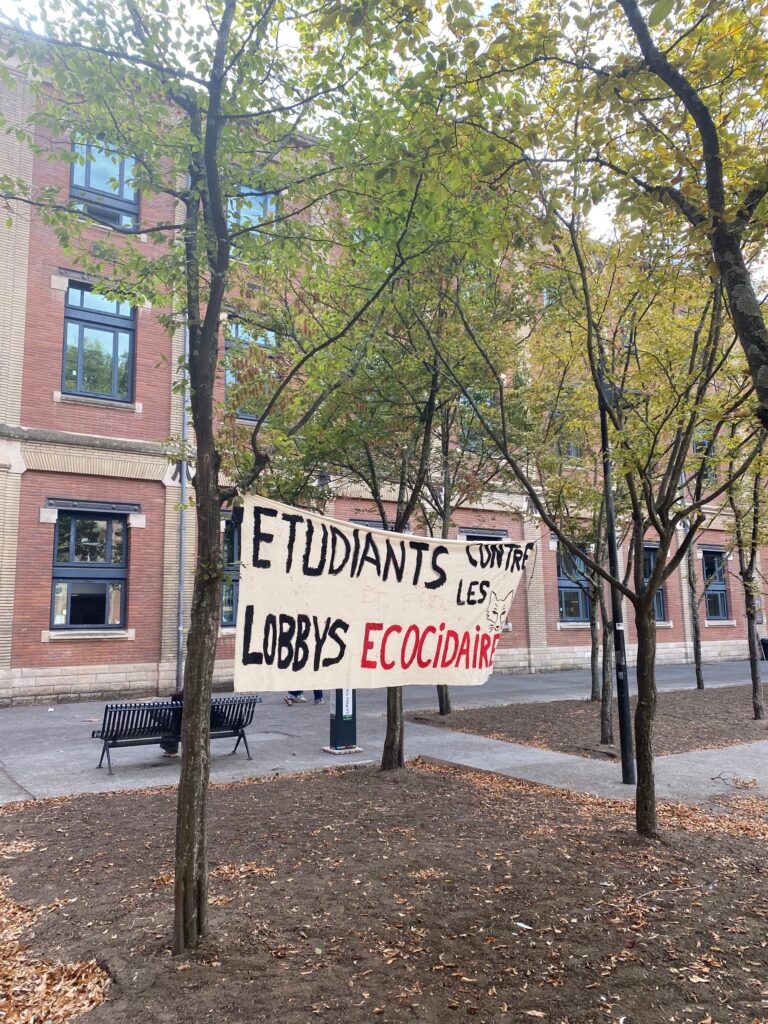
The first concrete reaction I saw in Toulouse was the blockade at Sciences Po, where I am an external researcher. University students occupied the campus, known as the Manufacture des Tabacs, on 1 October. In Turkish, the word “occupation” inevitably brings to mind a violent act. This was nothing of the sort. To support the high school students’ legitimate protests, the university students occupied the school peacefully and blocked the entrances and classes. The school administration did not react the way one might expect in Turkey. On the contrary, it was supportive. Faculty and staff left the campus to the students. During this time (about two weeks), we also stayed out of the building rather than working there. Meanwhile, the students held colourful events and debates in the courtyard. Police were not immediately set on them. In fact, in four years I have never once seen police enter the school. The university culture here is completely different from Turkey’s. But of course, there are exceptions.
Two weeks ago, on 5 October, after a general assembly organised by students and staff, police intervened at Sorbonne Nouvelle’s Nation campus at the university president’s request. Besides the evidence from videos shared online, the unions also collected various testimonies of police violence. The university administration then decided to close its campuses for two weeks. On Monday 19 October, the Nation campus reopened to staff only. While students held a general assembly in the university’s front courtyard, the president sent a message to the university community announcing his resignation. His decision to call the police onto campus had drawn strong reactions and criticism from the academic community. In French academia, police entering a campus is not an intervention that is easily accepted. It is seen as a direct attack on the university’s autonomy.
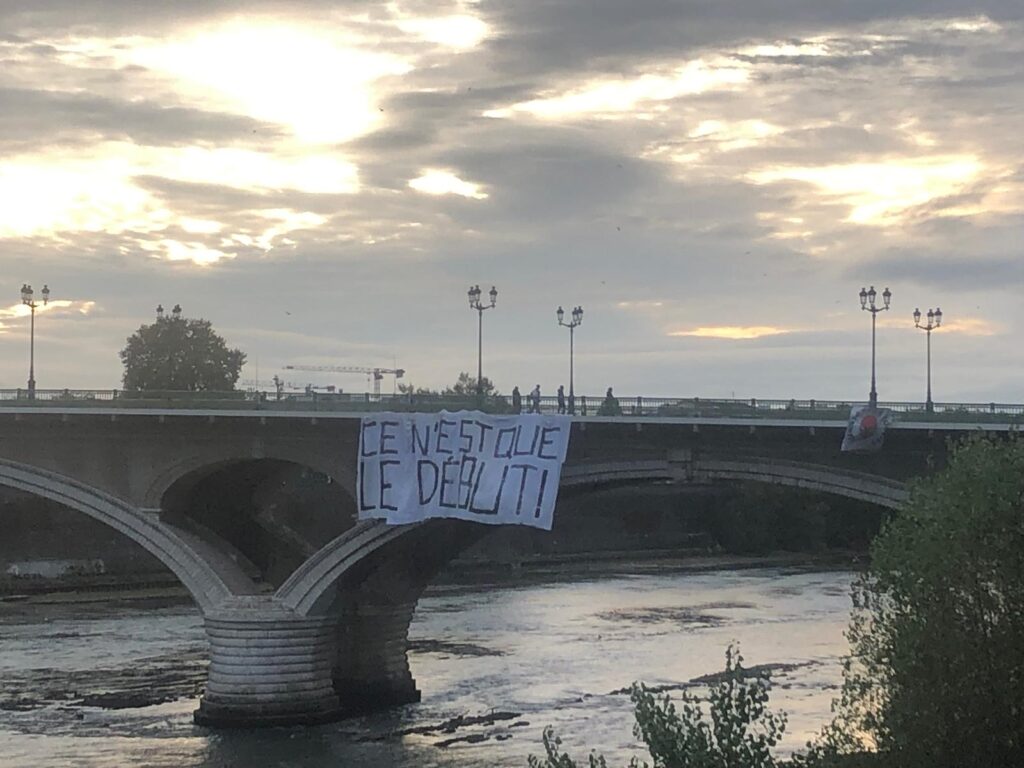
“This is only the beginning!”
Back in Toulouse, after the campus blockade on 1 October, turnout for the nationwide mass protest on 6 October was enormous. Over the past four years in Toulouse I have joined countless protests, from those against the pension reform to May Day, feminist marches and LGBTI+ Pride marches. But the 6 October protest really was the biggest I have seen in recent times. Naturally, towards the end the police were not short of pepper spray to disperse the protesters.
Beyond that, there were large protests at high schools in Toulouse, especially in the Arènes area, and once again the police were generous with the pepper spray. During one of these protests I happened to be at a hospital, and the gas got all the way inside the building. For those of us who have been exposed to it at protests in Turkey, it was nothing out of the ordinary.
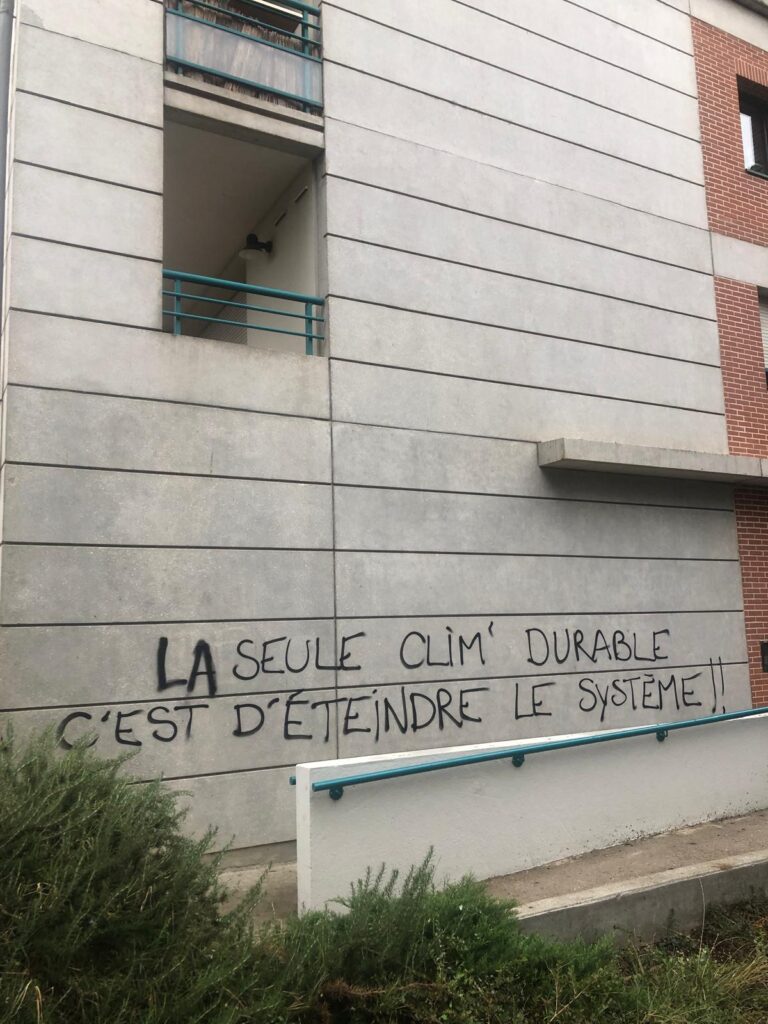
“The only sustainable air conditioning is shutting down the system!”
Finally, a few words on what I saw in Toulouse at the mass protests of 17 October. What struck me most was the remarkable turnout of young people, and above all of teenage high school students. From every street we turned into, groups of them seemed to burst out, holding banners, their faces masked, some wearing swimming goggles and others ski goggles. Much like the scenes in Paris, tourists in the city centre who had nothing to do with the events seemed lost among the young protesters, making for a strange and comic contrast. There were also many large groups of young people dressed head to toe in black, their faces covered with black balaclavas or similar masks. That day you could taste the pepper spray in every side street in the city centre. Even more striking was that after the daytime protest the crowds did not disperse at all. They kept growing and carried on protesting late into the night.
This is also where the looting needs to be addressed. Images of several looting incidents in Toulouse spread on social media. I did not see any myself, but some friends told me they saw a few Carrefour stores being looted. Frankly, I find it deeply saddening and infuriating that the damage suffered by these big brands is endlessly repeated in the media until it overshadows the legitimate protests. These brands are symbols of capitalism with enormous capital, and they exploit workers and nature; the damage to them is a drop in the ocean. By contrast, the historic buildings set on fire in several French cities do of course break one’s heart. But we know that the media in France is mostly in the hands of big capital owners. What these groups care about and try to highlight is not the children who lose a hand or an eye during the protests or face mass arrests and detentions. It is the few pennies of damage done to big capital and luxury brands.
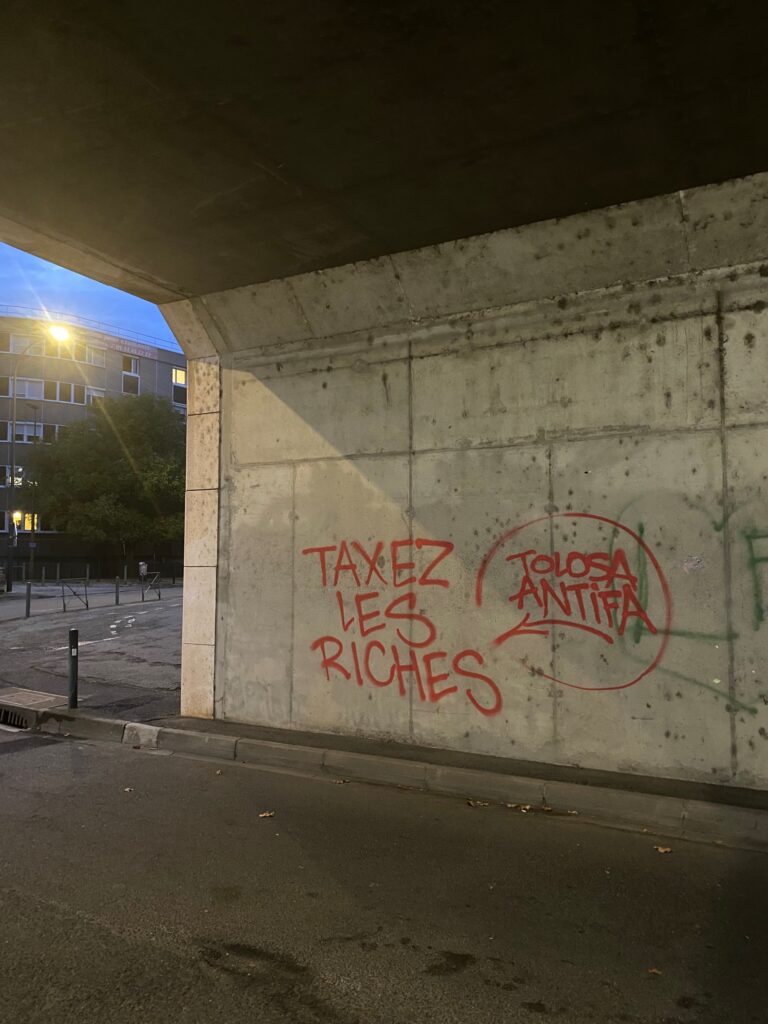
One of the protests’ main slogans: “Tax the rich!”
Of course, the ideal is for the protests to continue as they mostly have: peacefully, without violence, with the focus on voicing justified demands. But the media keeps reheating the looting by provocateurs and opportunists, serving it up to viewers again and again as if it represented the whole movement. That may make the media as much of a problem, and as responsible, as the government, which has so far produced no tangible solution.
Yet what has stayed with me most from the protests so far is the struggle of young people fighting for their justified demands. They are trying to get an education in classrooms that are like a sauna in summer and freezing in winter, badly overcrowded, with too few teachers. In such an unequal environment, they are also trying to get into university, and that is another justified point of objection. The students also oppose Parcoursup, the national online admissions platform that final-year high school students in France use to apply to universities and other higher education programmes. Their reasons: the system turns access to university into a competitive and uncertain process, disadvantages some students because of social and educational inequalities, makes it harder for everyone to get the education they want, and lacks transparency. This is exactly where we should remember the universities, whose education and research budgets are cut further every day. If these students manage to get into university, mountains of problems and inequalities await them there too. Today, between 160,000 and 170,000 temporary lecturers, without permanent posts or job security, teach about a fifth of all university classes. Unemployed PhD holders without permanent posts make up a significant part of France’s precariat. But that could be the subject of another article. In short, the high school students’ demands cover only part of the problems in the education system as a whole.
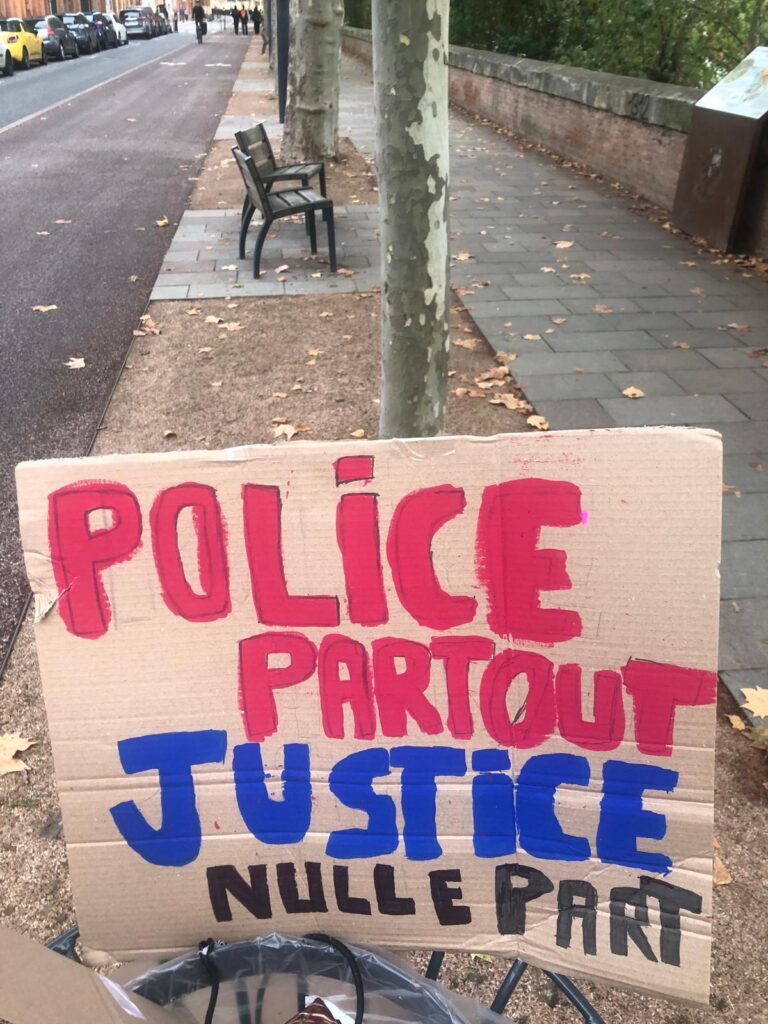
“Police everywhere, justice nowhere.”
Finally, in Toulouse, as in Paris, the protests were full of graffiti and banners, many of them with delightful humour. The graffiti still hasn’t been cleaned off. Most recently, a classical music concert in the middle of the protests in Paris reminded me of what we lived through during the Gezi protests: musicians wiping tears from the pepper spray out of their eyes while still playing their instruments, along with humour, creativity and hope. I can’t help comparing, because these youth-led protests in France resemble Gezi in many ways. Young people also led those protests, the largest mass protests in Turkey’s recent history, which lasted for months and had far more painful consequences for us. There was humour, music, art and solidarity. And of course, we shouldn’t forget the cubic metres of pepper spray and the water cannons.